
Strabismus Surgery in Turkey — Adult and Paediatric Eye-Muscle Correction at Eyeglow Istanbul
Adjustable-suture strabismus surgery for adults and paediatric eye-muscle surgery for children — esotropia, exotropia, hypertropia and decompensated adult misalignment. Every case is reviewed by our strabismus surgical team and operated on by a strabismus-trained ophthalmic surgeon at our partner accredited hospital. Written quote and a year of orthoptic follow-up.
Verified and listed across leading directories and authorities


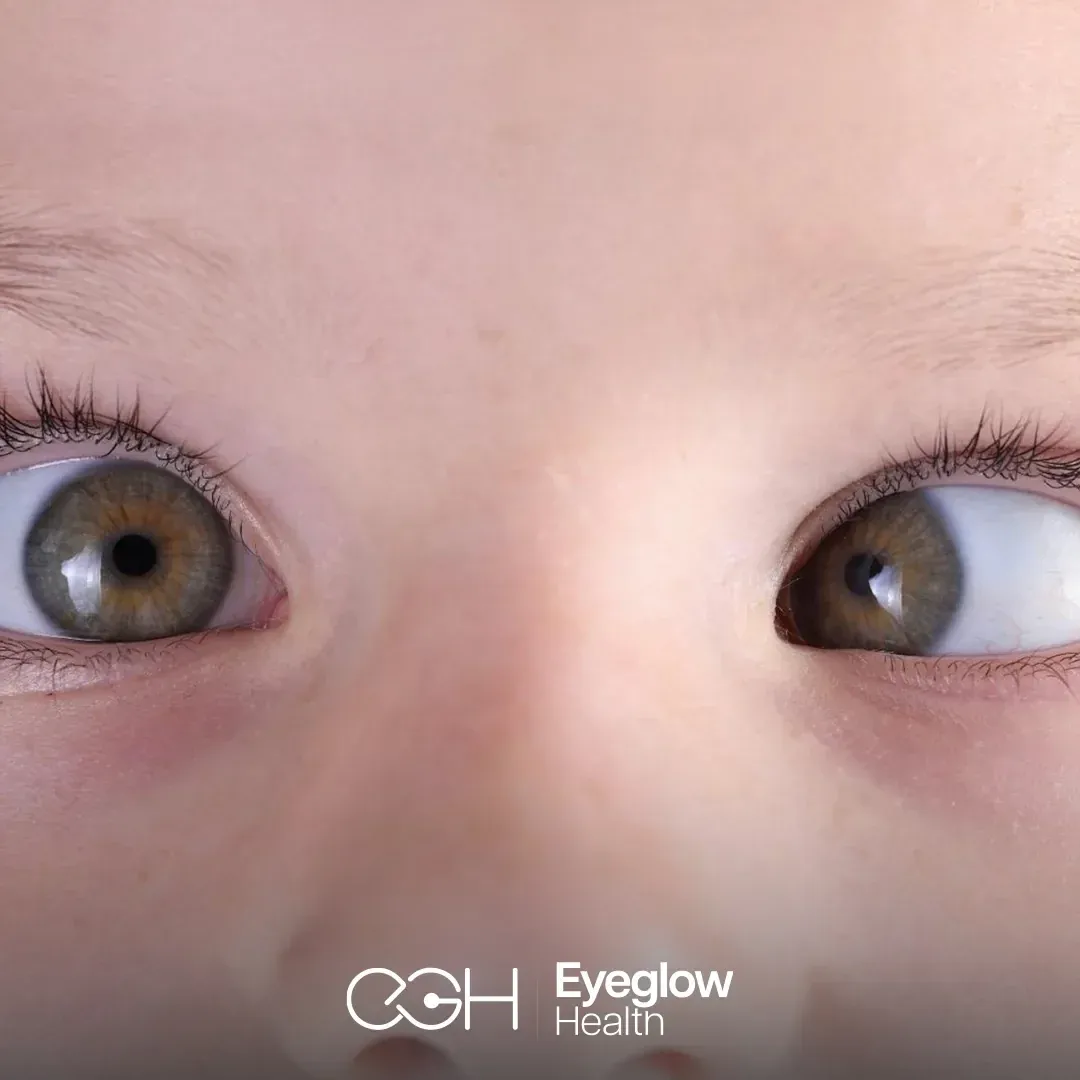
What is strabismus and strabismus surgery?
Strabismus is a misalignment of the eyes — one or both eyes turn inward (esotropia), outward (exotropia), upward (hypertropia) or downward (hypotropia). Strabismus surgery repositions the attachment points of the extraocular muscles on the globe — recession (weakening) or resection (strengthening) — to restore eye alignment. The procedure takes 45 to 90 minutes under general anaesthetic for children or local plus sedation for adults; adjustable-suture technique in adults allows post-operative fine-tuning of alignment.
At Eyeglow Health in Istanbul, strabismus surgery is reviewed by our strabismus surgical team and performed by a strabismus-trained ophthalmic surgeon at our partner accredited hospital. We follow American Association for Pediatric Ophthalmology and Strabismus (AAPOS) and Royal College of Ophthalmologists (RCO) UK guidelines and use validated orthoptic measurement protocols (prism cover test, motility in nine gaze positions, AC/A ratio) to plan surgical dosing.
Strabismus surgery is the appropriate treatment when measurable misalignment is constant or symptomatic and conservative options (glasses, prism correction, patching, vision therapy) have not resolved the deviation. It is not appropriate for everyone — acute neurological strabismus is generally observed for 6 to 12 months for spontaneous resolution before surgery, and active thyroid eye disease must be stable for at least 6 months. That assessment belongs to a surgeon who has personally reviewed your orthoptic measurements — not to a marketing brochure.
From first consultation to recovery at home
- 01
Online strabismus review
You share recent orthoptic measurements (prism cover test for distance and near, ocular motility, stereopsis), refraction history, prior strabismus surgery if any, and photographs of both eyes in nine gaze positions. Our team reviews the case and confirms the strabismus type (esotropia, exotropia, hypertropia / hypotropia, A or V pattern), suspected aetiology and whether surgery is the appropriate next step before a quote is issued.
- 02
Pre-operative orthoptic assessment in Istanbul
On day 1 we repeat full orthoptic evaluation: prism cover test, alternate prism cover, ocular motility in nine gaze positions, near and distance fusion, stereopsis, AC/A ratio, abnormal head posture documentation and a complete ophthalmic examination. The exact deviation in prism dioptres for distance and near determines the surgical plan — how many millimetres of recession or resection on which muscles.
- 03
Personalised surgical plan
Our strabismus-trained surgeon explains the planned procedure: which muscles will be operated on (medial rectus, lateral rectus, superior rectus, inferior rectus, superior oblique, inferior oblique), recession (weakening) or resection (strengthening) approach, and — in adults — whether an adjustable-suture technique will be used to fine-tune alignment in the first 24 hours. For children the procedure is performed under general anaesthetic with fixed sutures.
- 04
The procedure (45–90 minutes)
A conjunctival incision provides access to the extraocular muscle. The muscle is isolated on a hook, secured with absorbable sutures, then recessed (moved backwards on the eye to weaken its pull) or resected (a segment is removed and the muscle re-attached to strengthen its pull) according to the surgical plan. In adults the adjustable-suture technique allows post-operative fine-tuning: the muscle is anchored with a bow-tie suture that the surgeon can tighten or loosen in the recovery room within hours of surgery, when the patient is awake and alignment can be measured directly.
- 05
Day 1, day 7 and day 14 reviews
Mild redness, foreign-body sensation and intermittent diplopia are normal for 1 to 2 weeks. Eye drops are prescribed for 3 to 4 weeks. Children return to school after 1 week; adults to office work after day 5 to 7. Most absorbable sutures dissolve in 4 to 6 weeks. The final alignment is assessed at 6 to 8 weeks once swelling resolves and scars mature.
- 06
One-year structured aftercare
Scheduled orthoptic and motility reviews at one, three, six and twelve months. About 70 to 80 percent of strabismus surgeries achieve durable alignment after a single procedure; the remainder may need a second procedure or supplementary patching, glasses or botulinum toxin injection.
Esotropia vs Exotropia vs Hypertropia vs Adult Strabismus
Different strabismus types require different surgical approaches. Here is how the four most common scenarios are managed:
| Aspect | Esotropia | Exotropia | Hypertropia | Adult-onset |
|---|---|---|---|---|
| Strabismus type | Esotropia (eye turns in) | Exotropia (eye turns out) | Hypertropia (eye turns up) | Adult-onset strabismus |
| Typical cause | Congenital, accommodative, sixth-nerve palsy | Intermittent congenital, divergence excess, neurological | Superior oblique palsy, thyroid eye disease, orbital fracture | Decompensated childhood strabismus, neurological, post-trauma |
| Surgical approach | Recess medial rectus, resect lateral rectus | Recess lateral rectus, resect medial rectus | Recess superior rectus or strengthen inferior rectus / oblique | Adjustable suture technique recommended |
| Anaesthesia | General (children) or local (adults) | General (children) or local (adults) | General or local | Local + sedation typical |
| Success rate (single surgery) | 70–80% durable alignment | 70–85% | 60–75% | 70–80% (higher with adjustable suture) |
| Cosmetic vs functional | Both — restores binocular potential in children | Functional + cosmetic | Functional (diplopia relief) | Diplopia relief, social function |
Strabismus surgery pricing
All-inclusive Eyeglow package pricing. Your final, personalised quote is confirmed after imaging review — with no obligation.
| Procedure | Eyeglow price (all-inclusive) |
|---|---|
| Strabismus Surgery — all-inclusive | €2,500 – €4,000 |
What's included in your strabismus surgery package
Included in package
- Pre-op orthoptic evaluation (prism cover test, motility, fusion, stereopsis, AC/A ratio)
- Strabismus surgeon consultation + surgical plan review
- Strabismus surgery — single or multiple muscle, adjustable or fixed suture technique
- VIP airport transfers (return)
- All post-op drops + aftercare kit + protective sunglasses
- Day-1, day-7, day-14, 1m, 3m, 6m, 12m orthoptic and motility review
- Multilingual coordinator — 24/7 (paediatric coordinator available for child patients)
Paid separately
Items below are not part of the medical package — your coordinator helps you arrange them at no markup.
- Flights to/from Istanbul
- Personal expenses
- Glasses or contact lenses (continued at home; we recommend a refraction check at 6 months)
- Patching or vision therapy programmes (continued at home with a local orthoptist if amblyopia present)
- Unrelated medical treatments
- Travel insurance (flight cancellation, baggage, general trip cover); your coordinator can recommend a provider at no markup
The surgeons who will care for you
Your procedure is carried out by our strabismus surgical team at our partner accredited hospital in Istanbul. Their training and sub-specialty focus are shown below.
Medically reviewed byAssoc. Prof. Dr. Muhammet Derda Özer, FICO
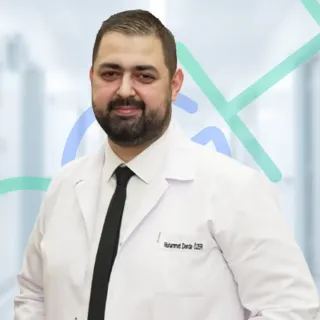
Assoc. Prof. Dr. Muhammet Derda Özer, FICO
Operating Surgeon
Specialises in ocular oncology, vitreoretinal diseases, cataract, refractive, corneal transplantation, glaucoma and pediatric ophthalmic surgery — more than 30,000 ophthalmic operations across a 14-year clinical career.
View full profile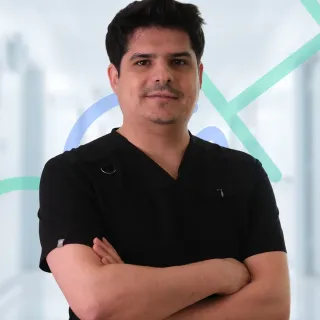
Op. Dr. Önder Aslan
Operating Surgeon
Board-certified ophthalmologist whose surgical practice spans anterior-segment procedures with oculoplastic and retinal sub-specialties — cataract, refractive, eyelid surgery and pediatric eye examinations including retinopathy of prematurity.
View full profile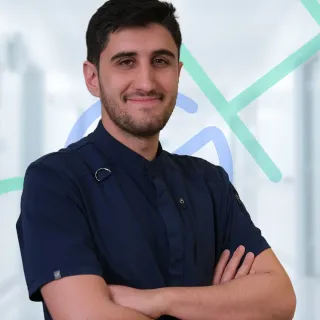
Op. Dr. Muhammed Talha Sadık
Operating Surgeon
Board-certified ophthalmologist working across vitreoretinal disease, refractive, cataract and glaucoma surgery, with an active anterior- and posterior-segment surgical caseload.
View full profileAre you a candidate for strabismus surgery?
You may be a good candidate if
- You or your child have a measurable horizontal or vertical strabismus that is constant or symptomatic (causing diplopia, asthenopia, social impact or amblyopia risk).
- Glasses, prism correction, patching and vision therapy have not corrected the alignment.
- You are an adult with decompensated childhood strabismus, post-trauma strabismus or neurogenic palsy (sixth, fourth or third nerve) requiring surgical correction.
- You can commit to a 1 to 12-month follow-up schedule (with home-clinic continuation possible after the first review).
- For paediatric patients: child is medically stable for general anaesthesia and accompanied by a parent / guardian for the entire stay.
A different pathway may be safer if
- Active uveitis, severe dry eye or any ocular surface disease — must be controlled before any conjunctival surgery.
- Uncontrolled thyroid eye disease (active phase) — surgery deferred until disease is stable for at least 6 months.
- Significant medical comorbidity preventing safe general or sedation anaesthesia (assessed case-by-case).
- Patients unable to attend post-operative reviews (paediatric cases especially) — alignment fine-tuning requires multiple measurements over 6 to 12 weeks.
- Strabismus due to acute neurological disease (recent stroke, cranial nerve palsy <6 months) — surgery is generally postponed for 6 to 12 months in case spontaneous improvement occurs.
Disclaimer. Information on this page is consistent with American Academy of Ophthalmology (AAO) Pediatric Eye Evaluations Preferred Practice Pattern, American Association for Pediatric Ophthalmology and Strabismus (AAPOS) consensus, and Royal College of Ophthalmologists (RCO) UK paediatric and strabismus guidelines. It is educational and not a clinical recommendation. The only reliable way to know whether strabismus surgery is right for you or your child is an orthoptist and ophthalmologist-led evaluation with full orthoptic measurements.
Realistic outcomes — the risks that actually matter
Every strabismus procedure has measurable risks. We list them here in the same plain language our surgical team uses in your consultation:
Under-correction or over-correction
Approximately 20 to 30 percent of strabismus surgeries result in residual deviation that may require a second procedure, supplementary patching, prism glasses or botulinum toxin injection. Adjustable-suture technique in adults reduces this rate.
Diplopia (double vision) after surgery
Transient diplopia is common in the first 1 to 2 weeks while the brain neuroadapts to the new alignment. Persistent diplopia is uncommon and is more likely in adults with longstanding strabismus — pre-operative prism trial can predict this risk.
Scleral perforation
Very rare (<0.5%) — accidental needle penetration through the sclera during muscle reattachment. Usually detected at the time of surgery and treated with cryotherapy or laser. Long-term consequences are uncommon if recognised intraoperatively.
Anterior segment ischaemia
Very rare — reduced blood supply to the front of the eye if multiple recti muscles are operated on simultaneously (the anterior ciliary arteries run with the recti). Risk is minimised by single-muscle staged surgery in patients with vascular comorbidities and by hooking techniques that preserve the ciliary arteries.