
Macular Degeneration Treatment in Turkey — Wet AMD, Dry AMD and Geographic Atrophy at Eyeglow Istanbul
Retina-specialist-led age-related macular degeneration (AMD) management — anti-VEGF intravitreal injections (Eylea, Lucentis, Vabysmo) for wet AMD, complement-inhibitor therapy (Syfovre, Izervay) for geographic atrophy, and AREDS2 protocol with structured OCT monitoring for dry AMD. Reviewed by our retina surgical team. Honest about chronic management — we deliver loading-dose treatment and a transferable plan for your home retina clinic.
Verified and listed across leading directories and authorities


What is age-related macular degeneration?
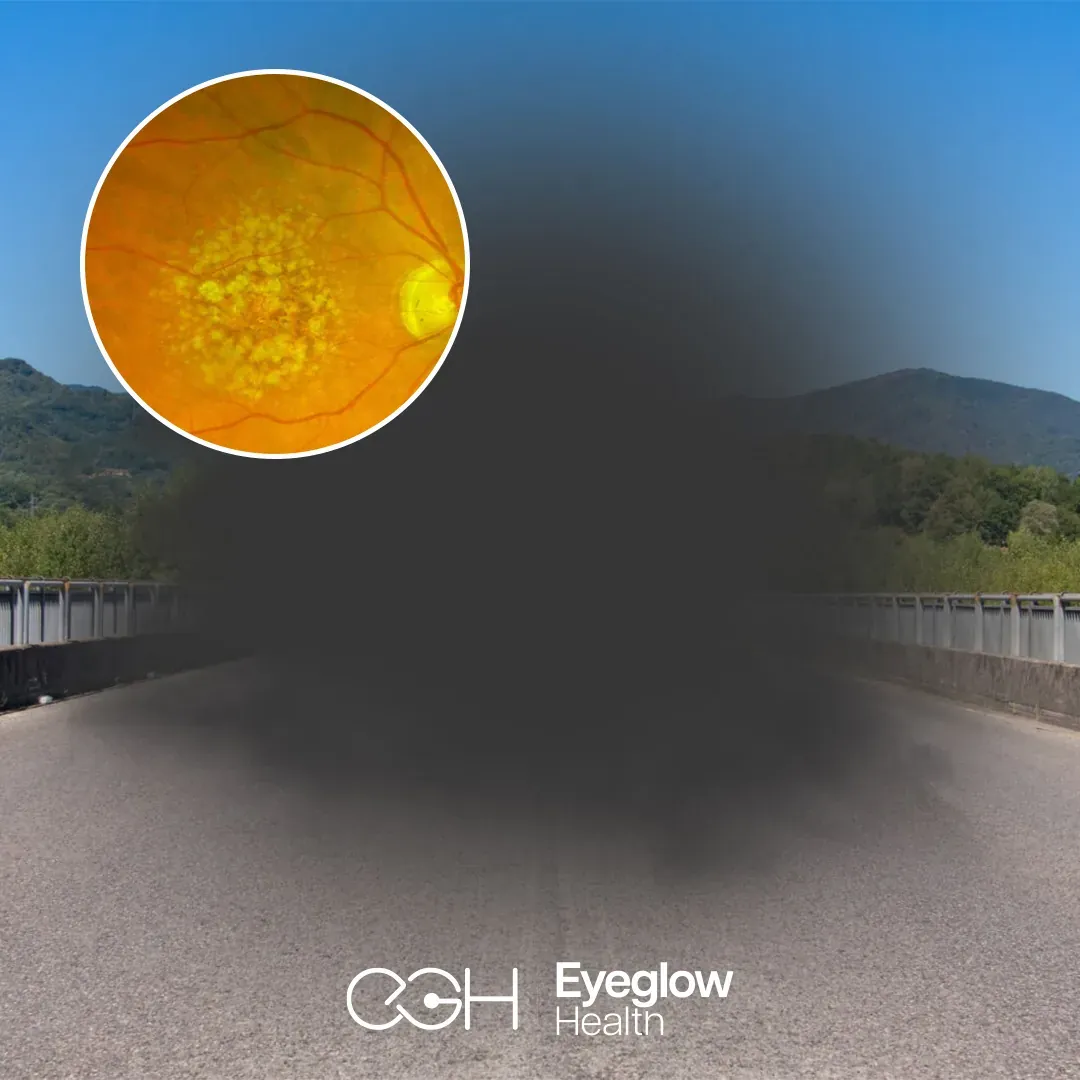
Age-related macular degeneration (AMD) is a progressive disease of the macula — the central part of the retina responsible for sharp central vision — and the leading cause of severe central vision loss in adults over 50. Dry AMD (85–90% of cases) progresses slowly through drusen formation and may advance to geographic atrophy; wet AMD (10–15%) involves abnormal blood vessels (choroidal neovascularisation) leaking fluid under the retina and can cause rapid central vision loss without treatment.
At Eyeglow Health in Istanbul, AMD is managed by our retina surgical team using FDA-approved anti-VEGF therapies (Eylea / aflibercept, Lucentis / ranibizumab, Vabysmo / faricimab) for wet AMD, complement-inhibitor therapy (Syfovre / pegcetacoplan, Izervay / avacincaptad — both FDA-approved in 2023) for geographic atrophy, and the AREDS2 vitamin protocol with structured monitoring for early and intermediate dry AMD. Our pathway is consistent with American Academy of Ophthalmology (AAO) AMD Preferred Practice Pattern and American Society of Retina Specialists (ASRS) treatment consensus.
AMD is a chronic condition. Eyeglow can deliver second-opinion review, loading-dose anti-VEGF treatment (3 monthly injections) and structured aftercare — but we are honest that long-term maintenance is best continued with a retina specialist at home, and we provide a transferable treat-and-extend protocol to make that seamless. That assessment belongs to a retina specialist who has personally reviewed your macular OCT and fundus imaging — not to a marketing brochure.
From first consultation to ongoing care
- 01
Online macular review
You share your most recent macular OCT, fundus photograph, fluorescein angiography or OCT angiography (if available), and any prior anti-VEGF injection records. Our retina surgical team reviews your case and confirms the AMD type (early / intermediate dry, geographic atrophy, neovascular / wet) and the most appropriate treatment plan before a quote is issued.
- 02
Pre-treatment imaging in Istanbul
On day 1 we repeat macular OCT, wide-field fundus photography, fluorescein angiography (FA) or OCT angiography (OCTA) and Amsler grid testing. These confirm the AMD stage, identify choroidal neovascularisation (CNV) location and lesion size in wet AMD, and quantify drusen and geographic atrophy area in dry AMD.
- 03
Personalised treatment plan
Our retina surgical team explains the plan in plain language: which anti-VEGF agent (Eylea / Lucentis / Vabysmo) is most appropriate for wet AMD, the loading and treat-and-extend schedule, and which complementary measures (AREDS2 vitamins, smoking cessation, blood pressure control) apply. For geographic atrophy we discuss Syfovre and Izervay complement-inhibitor options approved by FDA in 2023.
- 04
Intravitreal anti-VEGF injection (5–15 minutes)
Performed in a sterile minor procedure room. The eye is anaesthetised with topical drops and a betadine ocular wash, the conjunctiva is gently retracted, and the anti-VEGF agent is injected through a fine 30-gauge needle 3.5 to 4 mm behind the corneal limbus (the pars plana). The procedure typically causes little or no discomfort and takes about 15 minutes including preparation. You can usually go home or to your hotel within 30 minutes of the injection.
- 05
Same-day and 1-month review
You return for a slit-lamp check the morning after the injection and again at one month. Vision usually improves within 1 to 4 weeks for wet AMD if the lesion is treatment-responsive. Persistent floaters are normal for 24 to 48 hours after the injection; severe pain, redness or vision drop beyond 24 hours requires urgent review.
- 06
Treat-and-extend continuation plan
Wet AMD is a chronic condition that typically requires ongoing anti-VEGF injections — either monthly (initial loading dose, 3 injections), then progressively extended to 6 to 12-week intervals if the macula remains dry on OCT. Eyeglow can deliver loading-dose treatment in Istanbul or coordinate with your retina specialist at home for ongoing maintenance. Detailed written care plan provided so any retina clinic can continue your protocol seamlessly.
Dry vs Geographic Atrophy vs Wet AMD
The right treatment depends on the AMD type and stage. Here is how the four clinical scenarios are managed:
| Aspect | Dry — early / intermediate | Geographic atrophy | Wet — active CNV | Wet — stable on treatment |
|---|---|---|---|---|
| AMD type | Dry — early / intermediate | Dry — geographic atrophy | Wet — active CNV | Wet — stable on treatment |
| Treatment | AREDS2 vitamins, lifestyle, monitoring | Syfovre (pegcetacoplan) or Izervay (avacincaptad) — slow progression | Anti-VEGF — Eylea / Lucentis / Vabysmo monthly loading dose | Anti-VEGF treat-and-extend (every 6–16 weeks) |
| Vision outcome | Stable in most patients with AREDS2 | Progression slowed (~20% reduction in atrophy growth) | Visual improvement in 30–40%, stability in 90%+ | Maintained visual gain |
| Treatment frequency | Daily vitamins; annual review | Monthly or bi-monthly intravitreal injection | Monthly for first 3 (loading) | Every 6–16 weeks (extending) |
| Procedure type | No procedure | Intravitreal injection | Intravitreal injection | Intravitreal injection |
| Time commitment | Annual ophthalmologist review | Indefinite injection schedule | 3 months loading, then maintenance | Lifelong, lower frequency |
Personalised pricing
Every treatment plan is priced individually after your consultation and imaging review. Request a written, all-inclusive quote — clear, itemised, and with no obligation.
Request a written quoteWhat's included in your AMD treatment package
Included in package
- Pre-treatment imaging (macular OCT, wide-field fundus, FA or OCTA, Amsler grid)
- Retina-specialist consultation + treatment plan review
- Intravitreal anti-VEGF injection (Eylea / Lucentis / Vabysmo as appropriate)
- Sterile minor procedure room with betadine ocular prep + topical anaesthesia
- 5-star hotel — 3 nights per visit
- VIP airport transfers (return)
- Post-injection drops + aftercare kit
- Same-day and 1-month follow-up OCT review
- Written treat-and-extend care plan for continuation at your home clinic
- Multilingual retina coordinator — 24/7
- Complication insurance — covers eligible post-injection medical complications (endophthalmitis, retinal detachment, IOP spike) at our partner accredited hospital (issued in line with the Turkish Ministry of Health International Health Tourism Authority Certificate)
Paid separately
Items below are not part of the medical package — your coordinator helps you arrange them at no markup.
- Flights to/from Istanbul
- Personal expenses
- AREDS2 vitamins — recommended for purchase at home (over-the-counter, widely available)
- Continued anti-VEGF injections at home country between Istanbul visits
- Cataract surgery if eventually needed — quoted separately
- Low vision rehabilitation services
- Unrelated medical treatments
- Travel insurance (flight cancellation, baggage, general trip cover) — separate from the medical complication policy above; your coordinator can recommend a provider at no markup
The surgeons who will care for you
Your procedure is carried out by our retina surgical team at our partner accredited hospital in Istanbul. Their training and sub-specialty focus are shown below.
Medically reviewed by Assoc. Prof. Dr. Muhammet Derda Özer, FICO

Assoc. Prof. Dr. Muhammet Derda Özer, FICO
Operating Surgeon
Specialises in ocular oncology, vitreoretinal diseases, cataract, refractive, corneal transplantation, glaucoma and pediatric ophthalmic surgery — more than 30,000 ophthalmic operations across a 14-year clinical career.
View full profile
Op. Dr. Önder Aslan
Operating Surgeon
Board-certified ophthalmologist whose surgical practice spans anterior-segment procedures with oculoplastic and retinal sub-specialties — cataract, refractive, eyelid surgery and pediatric eye examinations including retinopathy of prematurity.
View full profile
Op. Dr. Muhammed Talha Sadık
Operating Surgeon
Board-certified ophthalmologist working across vitreoretinal disease, refractive, cataract and glaucoma surgery, with an active anterior- and posterior-segment surgical caseload.
View full profileAre you a candidate for AMD treatment at Eyeglow?
You may be a good candidate if
- You have a diagnosis of dry, geographic atrophy or wet (neovascular) age-related macular degeneration confirmed on macular OCT.
- You want a second-opinion review of your AMD type, prognosis and optimal treatment plan before continuing care at home.
- You have wet AMD and need anti-VEGF loading dose (3 monthly injections) before transitioning to a maintenance schedule at your home clinic.
- You have geographic atrophy and want to evaluate Syfovre or Izervay complement-inhibitor therapy approved by FDA in 2023.
- You have early or intermediate dry AMD and want a structured AREDS2 protocol with annual specialist monitoring.
A different pathway may be safer if
- You have active ocular or systemic infection — must be controlled before any intravitreal injection.
- You have advanced end-stage AMD with no light perception — treatment will not restore vision.
- You cannot commit to a long-term injection schedule — wet AMD requires chronic management; one-off treatment is rarely sufficient.
- You have severe untreated glaucoma — intraocular pressure must be optimised before injection.
- Pregnancy — anti-VEGF use is contraindicated.
Disclaimer. Information on this page is consistent with American Academy of Ophthalmology (AAO) AMD Preferred Practice Pattern, American Society of Retina Specialists (ASRS) consensus, AREDS / AREDS2 trial data (NIH National Eye Institute), and FDA approvals of Eylea (2011), Lucentis (2006), Vabysmo (2022), Syfovre (Feb 2023) and Izervay (Aug 2023). It is educational and not a clinical recommendation. The only reliable way to know which AMD treatment is right for you is a retina-specialist evaluation based on macular OCT, fundus imaging and angiography.
Realistic outcomes — the risks that actually matter
Every intravitreal injection carries measurable risk. We list them here in the same plain language our surgical team uses in your consultation:
Endophthalmitis (intraocular infection)
The most serious complication of intravitreal injection — published incidence below 0.05 percent (1 in 2,000 injections) with sterile technique, betadine prep and povidone-iodine. Detected at the day-1 review and treated immediately with intravitreal antibiotics if it ever occurs. Eyeglow includes a 24-hour ophthalmology-on-call line for any urgent post-injection symptom.
Intraocular pressure spike
Transient IOP elevation lasting minutes to hours is common after injection; managed by anterior chamber paracentesis at the time of injection if needed. Persistent glaucoma from repeat injections is uncommon (<5%) and managed with standard glaucoma drops.
Retinal detachment
Very rare (<0.1%) — typically detected by sudden flashes, floaters or curtain in vision. Eyeglow flags this urgently and arranges retinal surgery within 24 hours if it ever occurs.
Treatment burden and discontinuation
Wet AMD anti-VEGF treatment is a chronic commitment — published US registry data show approximately 25 percent of patients discontinue treatment within the first 2 years due to scheduling, travel or financial burden. Vision loss often follows discontinuation. Eyeglow provides a written treat-and-extend plan transferable to any retina clinic at home — to make sustained treatment realistic.