
Zirconia Crowns in Turkey — Monolithic CAD/CAM ZrO2 at Eyeglow Istanbul
Yttria-stabilised zirconium dioxide crowns milled in-house from monolithic ZrO2 blocks — flexural strength 900 to 1,200 MPa, metal-free and biocompatible, with multilayer translucent aesthetic options. Delivered at our partner accredited dental clinic by a board-certified dental specialist. Written tooth-by-tooth treatment plan and a year of structured photographic follow-up.
Verified and listed across leading directories and authorities


What are zirconia crowns?
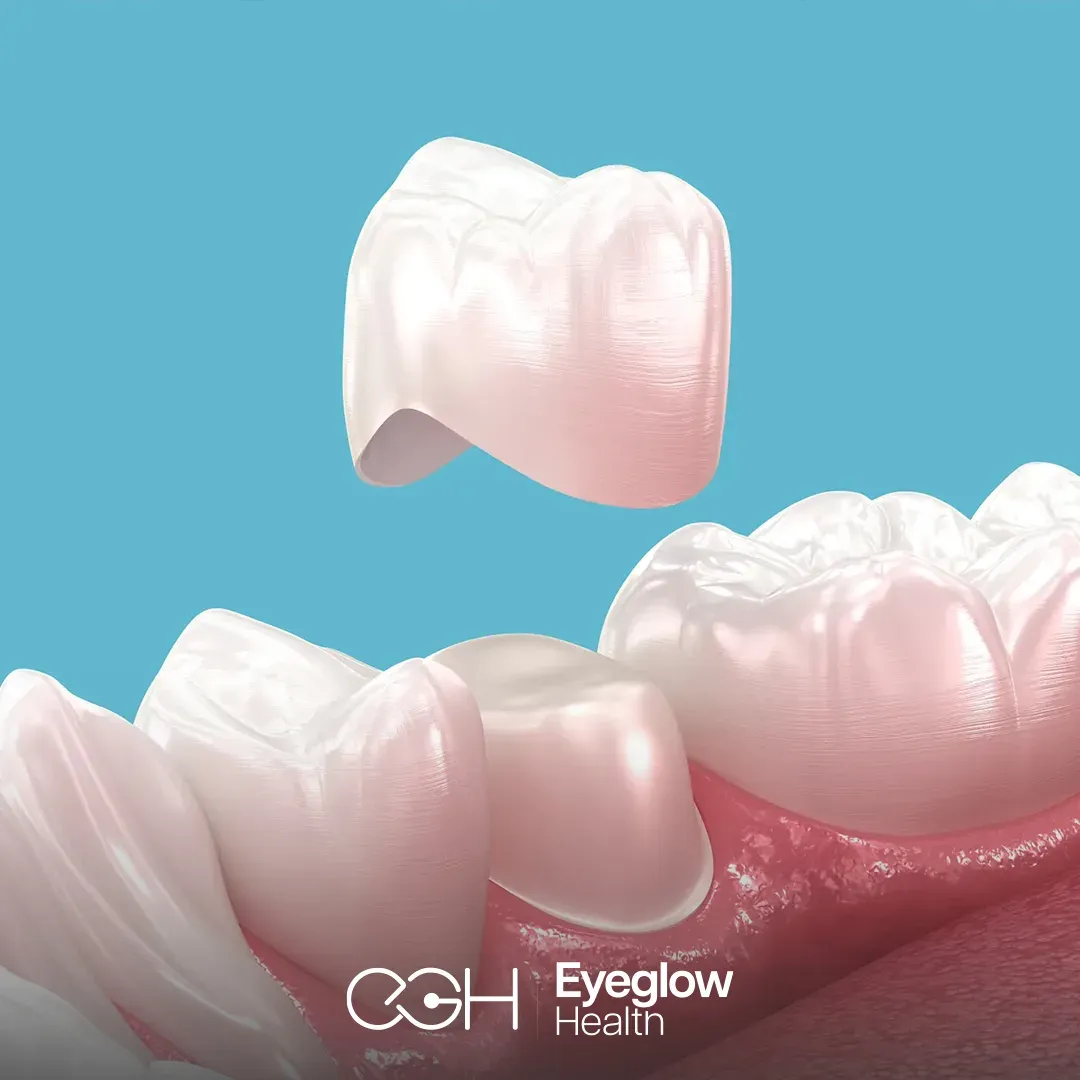
Zirconia crowns are full-coverage dental crowns CAD/CAM milled from yttria-stabilised zirconium dioxide (ZrO2) — a high-strength biocompatible ceramic with a flexural strength of 900 to 1,200 MPa (versus 400 MPa for E.max and 250 MPa for PFM porcelain). They are metal-free, eliminating the grey gingival margin that plagued older porcelain-fused-to-metal crowns, and have an expected lifespan of 15 to 20 years with proper home care.
At Eyeglow Health in Istanbul, zirconia crowns are produced at our partner accredited dental clinic using post-2018 generation monolithic ZrO2 blocks from Ivoclar IPS e.max ZirCAD, 3M Lava Plus, Zirkonzahn Prettau or Vita YZ HT/ST. CAD/CAM design in Exocad / 3Shape Dental System software, milling from pre-sintered blocks, and sintering at 1,500 to 1,600 degrees Celsius for 6 to 8 hours produce a crown that is dimensionally precise, optically refined and clinically validated. The Turkish Ministry of Health International Health Tourism Authority Certificate is held by both Eyeglow and the partner dental clinic. Our restorative protocols follow American Dental Association (ADA) and FDI World Dental Federation standards.
Zirconia is the right material for posterior single crowns, full-mouth rehabilitation (16 to 20 crowns), bruxism patients, bridges and patients with metal allergy. For anterior single-crown aesthetics in young patients, lithium disilicate (E.max) remains the gentlest aesthetic standard, although modern multilayer translucent zirconia has narrowed this gap. That decision belongs to a dental specialist who has examined your dentition, occlusion and aesthetic expectations — not to a marketing brochure or a price-list page.
From first consultation to final cementation
- 01
Online consultation + photo assessment
You share clear intra-oral photographs (front, left, right, upper arch, lower arch) plus any recent panoramic X-ray (OPG) you may already have. The dental specialist at our partner accredited dental clinic reviews your case, confirms whether zirconia crowns are the right indication (versus veneers, E.max or implants), and writes a tooth-by-tooth treatment plan before any quote is issued.
- 02
Day 1 — clinical examination + digital impressions
On arrival in Istanbul: clinical oral examination, periodontal screening, panoramic X-ray and 3D CBCT where required, intraoral scanner impressions (TRIOS / Medit i700 / 3Shape) replacing conventional alginate trays. Full digital smile design (DSD) preview of the planned crown shape, length and shade. Informed consent and final material confirmation: monolithic translucent ZrO2 versus layered porcelain-fused-to-zirconia.
- 03
Day 2 — minimally invasive preparation
Under local anaesthetic the dental specialist reshapes each tooth conservatively (typically 1.0 to 1.5 mm reduction — about half the reduction required for traditional PFM crowns). Digital impressions are taken of the prepared teeth and sent directly to the in-house CAD/CAM lab. Temporary acrylic crowns are placed the same day so you can eat and speak normally between appointments.
- 04
Day 3 to 4 — CAD/CAM milling + sintering
In the lab each crown is digitally designed in Exocad / 3Shape Dental System software, then milled from a monolithic pre-sintered ZrO2 block (Ivoclar IPS e.max ZirCAD, 3M Lava Plus, Zirkonzahn Prettau, Vita YZ HT/ST). Milled crowns are sintered at 1,500 to 1,600 degrees Celsius for 6 to 8 hours, then characterised with surface staining and glazing to match adjacent natural teeth. Multilayer ZrO2 blocks contain pre-built incisal-to-cervical translucency gradient.
- 05
Day 5 to 6 — try-in + final cementation
Each crown is tried in for fit, contact points, occlusion and shade match before any cement is applied. Adjustments are made chairside if required. Final cementation uses a dual-cure resin cement (Panavia V5, RelyX Unicem, Variolink Esthetic) following manufacturer-specific zirconia surface treatment (sandblasting + MDP-containing primer). Final occlusal equilibration and polishing complete the visit.
- 06
12-month structured aftercare
At-home written instructions: avoid chewing on the new crowns for 24 hours (cement cure), avoid hard foods (ice, hard nuts, popcorn kernels) for the first week, twice-daily soft brushing plus interdental cleaning around the new crown margins. Photographic review at 3, 6 and 12 months by video. Six-monthly professional cleaning with your local dentist is essential for long-term crown survival.
Zirconia vs E.max vs PFM vs Veneers
The right restorative material depends on tooth position, occlusal load, aesthetic priority and remaining tooth structure. Here is how the four main options differ:
| Aspect | Zirconia | E.max | PFM | Veneers |
|---|---|---|---|---|
| Material | Monolithic ZrO2 ceramic | Lithium disilicate glass-ceramic | Cobalt-chrome metal + porcelain | Feldspathic / E.max ceramic veneer |
| Flexural strength | 900–1,200 MPa | 400 MPa | 250 MPa porcelain layer | 120–400 MPa |
| Tooth reduction | 1.0–1.5 mm (conservative) | 1.5–2.0 mm | 2.0–2.5 mm (most invasive) | 0.3–0.7 mm (least invasive) |
| Aesthetic translucency | Good (multilayer) – excellent | Excellent (best in single) | Moderate (metal margin risk) | Excellent (anterior teeth) |
| Best indication | Posterior crowns, bridges, full mouth | Anterior single crowns, inlays | Legacy use — largely superseded | Anterior aesthetic correction only |
| Metal-free / biocompatible | Yes (no gingival greyline) | Yes | No (metal core) | Yes |
| Expected lifespan | 15–20 years | 10–15 years | 8–12 years | 10–15 years anterior |
Personalised pricing
Every treatment plan is priced individually after your consultation. Request a written, all-inclusive quote — clear, itemised, and with no obligation.
Request a written quoteWhat's included in your zirconia crown package
Included in package
- Pre-op clinical examination + periodontal screening
- Panoramic X-ray (OPG) + 3D CBCT scan where indicated
- Digital intraoral scan (TRIOS / Medit i700 / 3Shape)
- Digital smile design (DSD) preview before preparation
- Conservative tooth preparation under local anaesthetic
- CAD/CAM milled monolithic zirconia crowns (Ivoclar / 3M / Zirkonzahn / Vita)
- Temporary acrylic crowns between visits
- Try-in + dual-cure resin cementation (Panavia V5 / RelyX / Variolink)
- 5-star hotel — 5 to 7 nights depending on case size
- VIP airport transfers (return)
- 3, 6 and 12-month photographic video follow-up
- Multilingual dental coordinator — 24/7
- Complication insurance — covers eligible post-operative medical complications during the recovery period at our partner accredited clinic (issued in line with the Turkish Ministry of Health International Health Tourism Authority Certificate)
Paid separately
Items below are not part of the medical package — your coordinator helps you arrange them at no markup.
- Flights to/from Istanbul
- Personal expenses
- Periodontal treatment if active gum disease is detected (quoted separately)
- Root canal treatment on teeth requiring endodontic therapy before crown
- Implants if missing teeth are replaced as part of the plan
- Subsequent maintenance with your local dentist (6-monthly cleaning recommended)
- Travel insurance (flight cancellation, baggage, general trip cover) — separate from the medical complication policy above; your coordinator can recommend a provider at no markup
Are you a candidate for zirconia crowns?
You may be a good candidate if
- You have one or more severely broken-down, large-restoration or root-canal-treated posterior teeth that need full-coverage protection.
- You want a metal-free, biocompatible crown that eliminates the grey gingival margin risk of older porcelain-fused-to-metal (PFM) crowns.
- You are planning a full-mouth rehabilitation with 14 to 20 crowns and prefer a single uniform material across all teeth.
- You grind your teeth (bruxism) or have heavy occlusal forces — zirconia's 900 to 1,200 MPa flexural strength is the most fracture-resistant ceramic option available.
- You meet standard crown candidacy: healthy gums, controlled periodontal disease, sufficient remaining tooth structure or root canal protection.
Another option may be smarter if
- You only want anterior aesthetic improvement on healthy unrestored teeth — porcelain veneers preserve more enamel and are usually the right choice.
- You have untreated active periodontal disease — gum health must be established before any crown work.
- You expect zirconia to be 'whitened' later — like all ceramics, the shade is fixed at fabrication and cannot be bleached.
- You are uncomfortable with 1.0 to 1.5 mm of tooth reduction — bonded restorations or onlays may be more conservative.
- You have unrealistic expectations about 'one-size whiter' aesthetic uniformity in a single arch — natural teeth have intrinsic colour and value variation; we are honest about this in consultation.
Disclaimer. Information on this page is consistent with American Dental Association (ADA) clinical guidance, FDI World Dental Federation standards and Turkish Ministry of Health International Health Tourism Authority Certificate requirements. The choice between zirconia, E.max, PFM or veneers is a case-by-case clinical decision based on tooth position, occlusion, aesthetic priority and remaining tooth structure — not a marketing-driven default.
Realistic outcomes — the risks that actually matter
Every restorative procedure has measurable risks. We list them here in the same plain language our dental specialist uses in your consultation:
Tooth reduction is irreversible
Even with conservative zirconia preparation (1.0 to 1.5 mm), the enamel and dentine removed for the crown cannot be replaced. Once a tooth is crowned, the long-term commitment is to crown maintenance and eventual replacement (every 15 to 20 years on average). We do not recommend zirconia on cosmetically healthy unrestored teeth purely for whitening — veneers or in-office bleaching are more conservative options.
Post-operative sensitivity
Mild thermal sensitivity for 2 to 6 weeks after crown cementation is normal and typically self-resolves. Persistent sensitivity beyond 8 weeks may indicate pulpal inflammation requiring root canal treatment before the crown can be considered definitive. Pre-existing deep restorations or recent fillings carry a 5 to 15 percent risk of post-cementation endodontic complications.
Chipping or fracture of opposing teeth
Older first-generation high-translucency zirconia formulations were associated with accelerated wear of opposing natural enamel due to surface roughness. Modern multilayer zirconia (post-2018 generation) with proper glazing has wear behaviour comparable to natural enamel in published in-vivo studies. We use only post-2018 generation Ivoclar, 3M, Zirkonzahn or Vita zirconia with proper sintering and glazing protocols.
Aesthetic limitation in anterior teeth
Monolithic zirconia gives excellent strength but historically less translucency at the incisal edge than lithium disilicate (E.max). Modern multilayer translucent ZrO2 blocks (premium upgrade) include built-in incisal translucency gradient that approaches E.max aesthetics. For high-aesthetic anterior single crowns (e.g. central incisor in young patient), E.max remains the preferred choice; the dental specialist will discuss this honestly in your consultation.