
E.max Crown in Turkey — Ivoclar IPS e.max Lithium Disilicate at Eyeglow Istanbul
Genuine Ivoclar Vivadent IPS e.max lithium disilicate crowns — IPS e.max CAD (CAD/CAM milled) or IPS e.max Press (heat-pressed, layered) — for anterior teeth where translucency and natural vitality are the priority. Flexural strength 360–400 MPa; reference material for anterior single-crown aesthetics. Delivered at our partner accredited dental clinic by a board-certified dental specialist. Written treatment plan and a year of structured photographic follow-up.
Verified and listed across leading directories and authorities


What is an E.max crown?
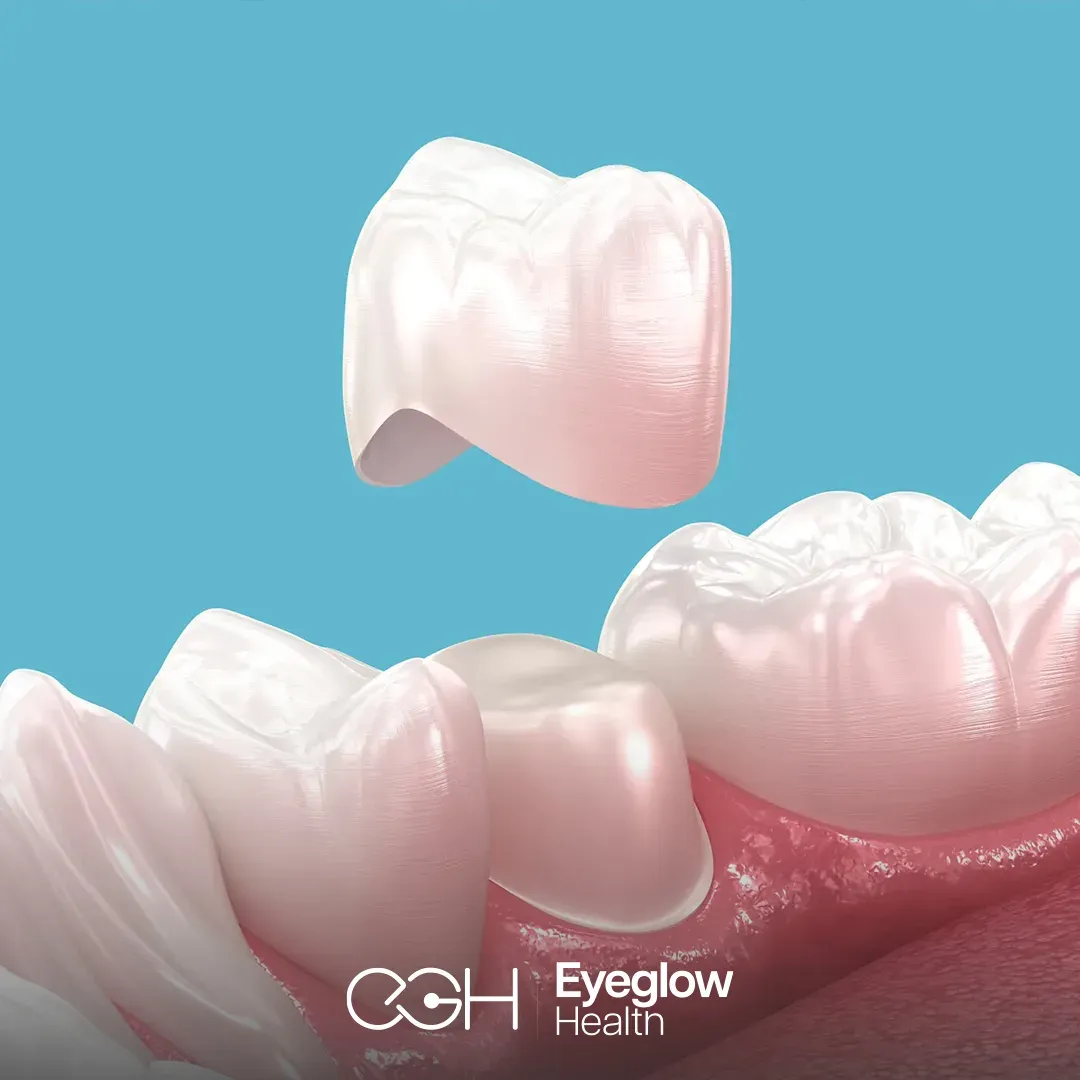
E.max crown is a full-coverage dental crown made from Ivoclar Vivadent IPS e.max lithium disilicate glass-ceramic — a Swiss-engineered material that combines natural translucency with a flexural strength of 360 to 400 MPa. Two clinical variants exist: IPS e.max CAD (CAD/CAM milled from a pre-crystallised block, then crystallisation-fired) for predictable monolithic restorations, and IPS e.max Press (heat-pressed with lost-wax technique, then layered with IPS e.max Ceram porcelain) for maximum aesthetic customisation in demanding anterior shade-matching cases.
At Eyeglow Health in Istanbul, E.max crowns are produced at our partner accredited dental clinic using genuine Ivoclar Vivadent IPS e.max Press ingots and IPS e.max CAD blocks — not generic lithium disilicate alternatives. Both Eyeglow and our partner dental clinic hold the Turkish Ministry of Health International Health Tourism Authority Certificate. Our restorative protocols follow American Dental Association (ADA), FDI World Dental Federation and Ivoclar clinical guidelines.
E.max is the reference standard for anterior crown aesthetics globally — the material dentists choose when a single crown must match a natural adjacent tooth under clinical examination. It is not the right choice for every tooth: posterior molars under heavy occlusal loading or in bruxism patients are better served by monolithic zirconia (900 to 1,200 MPa). A dental specialist who gives you an honest material recommendation based on your specific tooth, position and occlusion — rather than one material for everything — will give you the most durable and aesthetically natural result.
From first consultation to final cementation
- 01
Online consultation + photograph assessment
You share clear intra-oral photographs (front, left, right, upper arch, lower arch) and any existing X-rays or panoramic OPG. The dental specialist at our partner accredited dental clinic evaluates whether E.max is the right material for your case: teeth position (anterior vs posterior), occlusal load, bruxism status, shade objective and remaining tooth structure. E.max IPS lithium disilicate is the material of choice for anterior crowns (incisors and canines) where aesthetic translucency is the primary requirement — and for premolars in patients with normal occlusal loading. A written tooth-by-tooth treatment plan is issued before any quote.
- 02
Day 1 — clinical examination + digital impressions
On arrival in Istanbul: clinical oral examination, periodontal screening, panoramic X-ray and 3D CBCT where required, digital intraoral scanner impressions (TRIOS / Medit i700 / 3Shape). Digital smile design (DSD) preview is created: shade mapping against adjacent natural teeth, crown length, emergence profile and incisal translucency target. The dental specialist confirms the material variant: IPS e.max CAD (CAD/CAM milled monolithic, faster turnaround, excellent predictability) or IPS e.max Press (heat-pressed ingots, layered porcelain for maximum aesthetic customisation). Informed consent is signed at this visit.
- 03
Day 2 — conservative preparation + temporary crowns
Under local anaesthetic: 1.5 to 2.0 mm conservative tooth preparation — slightly more than zirconia (1.0–1.5 mm) but significantly less than traditional PFM (2.0–2.5 mm). The additional 0.5 mm over zirconia is required to accommodate E.max's lower translucency at thin sections — optical depth is necessary for the characteristic vitality and incisal translucency of lithium disilicate. Digital impressions of the prepared teeth are sent to the in-house CAD/CAM lab. Temporary acrylic crowns are placed the same day so you can eat and speak normally between appointments.
- 04
Day 3 to 4 — fabrication (milling or pressing + characterisation)
IPS e.max CAD route: The crown is digitally designed in Exocad / 3Shape Dental System, then milled from a pre-crystallised lithium disilicate block (IPS e.max CAD A2-HT, A3-LT, BL1-BL4 shade range). The milled crown undergoes crystallisation firing at 840 degrees Celsius for 25 minutes — the final hardness and translucency develop during this firing. Post-crystallisation characterisation with IPS e.max Ceram surface stains and glaze finishes the shade match. IPS e.max Press route: The ceramic technician waxes a crown pattern, invests it and heat-presses the E.max ingot at 920 degrees Celsius using the lost-wax technique. The pressed crown is built up with IPS e.max Ceram layered porcelain for the incisal translucency effect. E.max Press is the ceramic technician's choice when maximum shade customisation and incisal characterisation are required — particularly for single central incisors that must match a natural opposite tooth.
- 05
Day 5 to 6 — try-in + final cementation
Each E.max crown is tried in for fit, contact points, occlusion, shade match and incisal translucency before cementation. E.max requires a specific cementation protocol to achieve full mechanical integration: internal surface etching with hydrofluoric acid (IPS Ceramic Etching Gel) + silane application (Monobond Plus) + resin cement (Variolink Esthetic, Rely X Ultimate, Panavia V5). This surface treatment creates a chemical-micromechanical bond between the ceramic and tooth structure that is substantially stronger than the adhesive bond achievable with zirconia. Occlusal equilibration and final polishing complete the appointment.
- 06
12-month structured aftercare
E.max crowns have a smooth glazed surface that resists staining and plaque adhesion. Home care: twice-daily soft brushing, daily interdental cleaning around crown margins, six-monthly professional cleaning with local dentist. Avoid using anterior teeth for biting hard objects (bread crusts, hard fruit, opening sachets) — E.max's 360 to 400 MPa flexural strength is sufficient for anterior biting but not for the parafunctional loads of bruxism. If you grind at night, a custom occlusal splint from your local dentist is strongly recommended. Photographic review at 3, 6 and 12 months by video consultation.
How Eyeglow coordinates dental restoration
Eyeglow Health's clinical specialism is ophthalmology and vision care. Dental restoration is delivered through our partner accredited dental clinic network in Istanbul — specialist dental clinics that hold the Turkish Ministry of Health International Health Tourism Authority Certificate and use genuine manufacturer-sourced restorative materials (Ivoclar Vivadent IPS e.max, 3M Lava, Zirkonzahn Prettau, Vita YZ).
For your E.max crown treatment: the operating dental specialist is a partner specialist with documented restorative and aesthetic dentistry case volume. Eyeglow is responsible for your named coordinator (single contact from first message to 12-month photographic follow-up), the assessment framework, the package structure (hotel, transfers, complication insurance) and your experience in Istanbul. The dental procedure takes place at the partner clinic with the partner dental and ceramic laboratory team.
This model is disclosed transparently in every consultation. Specialist restorative dentists and ceramists working with genuine Ivoclar Vivadent materials in their documented domain — rather than general health tourism clinics where quality control varies by case — produce more predictable aesthetic outcomes for demanding anterior restorative cases.
E.max vs Zirconia vs PFZ vs Veneers — honest comparison
The right restorative material depends on tooth position, occlusal load, aesthetic priority, bruxism status and remaining tooth structure. E.max and zirconia are complementary materials — the gold-standard full-mouth rehabilitation uses both. Here is how the options differ:
| Aspect | E.max (IPS e.max) | Zirconia (ZrO2) | PFZ (Porcelain-fused-to-Zirconia) | Veneers |
|---|---|---|---|---|
| Material | Lithium disilicate glass-ceramic (Ivoclar IPS e.max) | Yttria-stabilised zirconia (ZrO2) | Porcelain-fused-to-zirconia (PFZ) | Feldspathic / E.max ceramic veneer |
| Flexural strength | 360–400 MPa | 900–1,200 MPa | 900 MPa core / 250 MPa porcelain | 120–400 MPa |
| Anterior translucency | Excellent — natural vitality, incisal translucency, chameleon effect | Good–excellent (multilayer premium ZrO2) | Moderate (zirconia core visible through thin porcelain) | Excellent (anterior only) |
| Best indication | Anterior crowns (incisors, canines), premolars — aesthetic priority | Posterior crowns, bridges, bruxism patients, full mouth | Posterior bridge pontics with aesthetic requirement | Anterior surface correction only — not full crown |
| Tooth reduction | 1.5–2.0 mm | 1.0–1.5 mm (less invasive) | 1.5–2.0 mm | 0.3–0.7 mm (least invasive) |
| Bruxism suitability | Limited — fracture risk with heavy parafunctional load | High — 900–1,200 MPa withstands parafunctional forces | Moderate — porcelain layer may chip | Not appropriate — veneer fracture risk |
| Cementation bond | Chemical-micromechanical (HF etching + silane + resin) — strong adhesive bond | Mechanical + MDP resin (zirconia cannot be HF-etched) | Mixed (zirconia core + layered porcelain) | Chemical-micromechanical (same as E.max) |
| Expected lifespan | 10–15 years | 15–20 years | 10–15 years (porcelain chip risk limits lifespan) | 10–15 years anterior |
| Genuine brand available | Ivoclar Vivadent IPS e.max Press / e.max CAD (Switzerland) | Ivoclar IPS e.max ZirCAD, 3M Lava, Zirkonzahn Prettau, Vita YZ | Various — brand transparency varies | Various — E.max Press veneer (Ivoclar) is reference standard |
Gold-standard combined plan: IPS e.max anterior (incisors + canines) + monolithic zirconia posterior (premolars + molars) — optimal aesthetic and functional material allocation for full-mouth rehabilitation. Ask your coordinator about combined package pricing.
Personalised pricing
Every treatment plan is priced individually after your consultation. Request a written, all-inclusive quote — clear, itemised, and with no obligation.
Request a written quoteWhat's included in your E.max crown package
Included in package
- Pre-op clinical examination + periodontal screening
- Panoramic X-ray (OPG) + 3D CBCT scan where indicated
- Digital intraoral scan (TRIOS / Medit i700 / 3Shape)
- Digital smile design (DSD) shade preview before preparation
- Conservative tooth preparation under local anaesthetic (1.5–2.0 mm)
- Genuine Ivoclar Vivadent IPS e.max crowns (e.max CAD or e.max Press — confirmed at consultation)
- Temporary acrylic crowns between visits
- Try-in + chemical-micromechanical cementation (HF etching + silane + resin cement)
- 5-star hotel — 5 to 7 nights depending on case size
- VIP airport transfers (return)
- 3, 6 and 12-month photographic video follow-up
- Multilingual dental coordinator — 24/7
- Complication insurance policy (Türkiye Ministry of Health certified, covers surgical complications including infection, retreatment, and emergency intervention up to package value)
Paid separately
Items below are not part of the medical package — your coordinator helps you arrange them at no markup.
- Flights to/from Istanbul
- Personal expenses
- Periodontal treatment if active gum disease is detected (quoted separately)
- Root canal treatment on teeth requiring endodontic therapy before crown
- Custom occlusal splint for bruxism management (recommended; arranged with local dentist)
- Subsequent maintenance with your local dentist (6-monthly cleaning recommended)
- Posterior zirconia crowns if included in combined full-mouth case (quoted separately or as combined package)
- Travel insurance (recommended — covers flight cancellation, baggage, non-surgical medical emergencies abroad; we coordinate referral if needed)
Are you a candidate for E.max crowns?
You may be a candidate if
- You need crowns on anterior teeth (incisors and canines) where achieving natural translucency and vitality is the aesthetic priority — E.max lithium disilicate is the reference material for anterior single-crown aesthetics.
- You want a single crown (or 2 to 4 anterior crowns) that must match adjacent natural teeth as closely as possible — E.max's "chameleon effect" and layered incisal translucency make it the ceramic technician's choice for demanding shade matching.
- You have premolars that need full-coverage crowns and your occlusal loading is not heavy — E.max is appropriate for premolar position with normal occlusal function.
- You are planning a combined full-mouth rehabilitation and want the clinically established gold-standard combination: E.max IPS e.max on anterior teeth + monolithic zirconia on posterior teeth.
- You meet standard crown candidacy: healthy gums, controlled periodontal disease, sufficient remaining tooth structure, no active bruxism or bruxism managed with a night splint.
Zirconia or another option may be smarter if
- You need crowns primarily on posterior teeth (molars) with heavy occlusal loading or bruxism — zirconia's 900 to 1,200 MPa flexural strength is substantially more fracture-resistant than E.max's 360 to 400 MPa. We will recommend monolithic zirconia for posterior crowns in bruxism patients without exception.
- You have uncontrolled or severe bruxism and no occlusal splint — E.max fracture risk under heavy parafunctional forces is a documented concern regardless of tooth position.
- You want to replace a bridge of more than 3 units at posterior positions — E.max is not approved for long-span posterior bridges; zirconia is the appropriate material.
- You have untreated active periodontal disease — gum health must be established before any crown work.
- Your primary motivation is achieving the absolute whiter shade (bleach-white BL1/BL2) on a complete full-mouth case — monolithic multilayer zirconia in high-translucency HT shade may be a more cost-effective approach for a uniform white full-mouth result.
Disclaimer. Information on this page is consistent with American Dental Association (ADA) clinical guidance, FDI World Dental Federation standards, Ivoclar Vivadent IPS e.max clinical guidelines and Turkish Ministry of Health International Health Tourism Authority Certificate requirements. The choice between E.max and zirconia (or combined) is a case-by-case clinical decision based on tooth position, occlusal load, bruxism status and aesthetic priority — not a material brand preference.
Realistic outcomes — the risks that actually matter with E.max
Every restorative procedure has measurable risks. We list them here in the same plain language our dental specialist uses in your consultation:
Lower fracture resistance than zirconia — posterior use requires careful case selection
E.max IPS lithium disilicate has a flexural strength of 360 to 400 MPa — substantially lower than monolithic zirconia (900 to 1,200 MPa). For posterior molars under heavy occlusal loading (chewing forces of 60 to 90 kg), this difference is clinically meaningful: published studies report 5-year fracture rates for E.max in molar position of 5 to 8 percent, compared to under 1 percent for monolithic zirconia. At Eyeglow Health, E.max is not placed on first or second molars without explicit discussion of this trade-off. If your primary goal is posterior durability, monolithic zirconia is our recommendation regardless of aesthetic preference.
Tooth reduction is irreversible (1.5–2.0 mm)
E.max requires slightly more tooth reduction than zirconia (1.5 to 2.0 mm vs 1.0 to 1.5 mm) because a minimum ceramic thickness is needed to achieve the characteristic translucency gradient. Once prepared, this enamel and dentine cannot be replaced. The preparation is conservative relative to older PFM crowns (2.0 to 2.5 mm) but still irreversible. We do not recommend E.max crowns on cosmetically healthy, unrestored anterior teeth purely for whitening — porcelain veneers (0.3 to 0.7 mm reduction) are more conservative and appropriate for cosmetic anterior correction without structural compromise.
Post-cementation sensitivity
Mild thermal sensitivity for 2 to 6 weeks after E.max crown cementation is normal and typically self-resolves as the cement sets fully and the pulp recovers from preparation. E.max uses a resin cementation protocol (HF etching + silane + resin cement) that involves slightly more chairside time and complexity than zirconia cementation — but produces a stronger adhesive bond. Persistent sensitivity beyond 8 weeks may indicate pulpal inflammation requiring root canal treatment. Pre-existing deep restorations carry a 5 to 15 percent risk of post-cementation endodontic complications, as with any crown preparation.
Genuine vs imitation E.max — brand transparency matters
Ivoclar Vivadent IPS e.max (both Press and CAD variants) is a Swiss-engineered, clinically documented material with over 20 years of published long-term data. Generic "lithium disilicate" blocks and ingots from other manufacturers vary significantly in crystalline structure, translucency consistency and mechanical properties. At Eyeglow Health we use only genuine Ivoclar Vivadent IPS e.max Press ingots and IPS e.max CAD blocks — the same materials used in Swiss, German and US dental laboratories. We are transparent about this in consultation and can provide the ceramic batch certificates on request.