
IVF & Fertility Treatment in Turkey — IVF, ICSI and Frozen Embryo Transfer at Eyeglow Istanbul
Standard IVF (in vitro fertilisation), IVF with ICSI for male factor infertility, and frozen embryo transfer (FET) at our partner accredited fertility centre under ASRM/ESHRE protocols. Controlled ovarian stimulation, oocyte retrieval under sedation, embryology lab fertilisation, embryo culture to day 3 or blastocyst day 5, ultrasound-guided embryo transfer. Cumulative pregnancy rate 30–50% per cycle, highly age-dependent — honest age-specific probability before any cycle is paid. Important: surrogacy, third-party donor gametes and non-medical gender selection are NOT legal in Turkey.
Verified and listed across leading directories and authorities


What is IVF (in vitro fertilisation)?
IVF — in vitro fertilisation — is an assisted reproduction procedure in which mature eggs are retrieved from the ovaries after controlled stimulation, fertilised in the laboratory with sperm (standard IVF or ICSI for male factor), cultured 3–5 days to embryo or blastocyst stage, and one or two embryos transferred into the uterus. Surplus high-quality embryos are vitrified (frozen) for future FET cycles. Cumulative pregnancy rate per cycle is 30–50%, age-dependent — best under 35, dropping sharply over 38.
At Eyeglow Health in Istanbul, IVF is delivered at our partner accredited fertility centre by a board-certified fertility specialist holding ASRM or ESHRE-equivalent credentials with documented cycle volume. The Turkish Ministry of Health International Health Tourism Authority Certificate is held by Eyeglow, and our partner fertility centre holds the additional Ministry of Health ART centre licence required by Turkish law. We follow ASRM (American Society for Reproductive Medicine) and ESHRE (European Society of Human Reproduction and Embryology) practice guidelines.
Important honest disclosure about Turkish law: Turkey permits IVF only for married heterosexual couples using their own genetic material (own eggs, own sperm). Third-party donor gametes (donor egg, donor sperm, donor embryo) are NOT permitted. Surrogacy is NOT legal in Turkey for any provider. Gender selection (sex selection for non-medical reasons) is NOT permitted; pre-implantation genetic diagnosis is restricted to serious heritable disease. If your situation requires any of these we cannot help in Turkey and will direct you to legitimate options in appropriate jurisdictions — we say so upfront rather than after you pay.
From first consultation to pregnancy outcome
- 01
Online consultation + fertility assessment
You share your fertility history (duration of infertility, prior pregnancies, prior treatments), partner sperm analysis if available, and any previous fertility test results (AMH, FSH, antral follicle count, hysterosalpingogram, semen analysis). Our fertility specialist reviews your case, identifies suspected cause (anovulation, tubal factor, male factor, endometriosis, age-related decline, unexplained), and recommends the appropriate pathway — IUI vs IVF vs ICVF + ICSI vs frozen embryo transfer.
- 02
Pre-treatment workup in Istanbul
For the woman: transvaginal ultrasound (antral follicle count, ovarian reserve assessment), AMH (anti-Müllerian hormone), FSH, LH, oestradiol on day 2–3 of cycle, TSH, prolactin, vitamin D, infectious disease screen (hepatitis B/C, HIV, syphilis — Turkish Ministry of Health protocol), hysterosalpingogram if tubal evaluation needed, endometrial assessment. For the man: full semen analysis (concentration, motility, morphology per WHO 2021), DNA fragmentation index where indicated, infectious disease screen. Both partners: lifestyle review (smoking, alcohol, BMI), supplement guidance (folic acid 400 mcg minimum from 3 months pre-pregnancy, vitamin D, CoQ10 if appropriate).
- 03
Treatment plan + protocol selection
The fertility specialist walks you through stimulation protocol selection — long agonist protocol (older standard, fewer cysts but longer downregulation), antagonist protocol (modern standard, GnRH antagonist prevents premature LH surge, shorter and safer with lower OHSS risk), or mini-IVF / natural-cycle IVF (lower stimulation, lower yield, lower cost — for low responders or specific cases). Fertilisation method: standard IVF (sperm placed with eggs in culture) vs ICSI (single sperm injected into each mature egg — used for male factor infertility, prior IVF failure, or low egg yield). Embryo transfer: day 3 (cleavage stage) or day 5 (blastocyst stage). PGT-A (aneuploidy screening) and PGT-M (monogenic disease screening) discussed where indicated by age or family history.
- 04
Ovarian stimulation phase (10–14 days)
Daily subcutaneous injection of FSH (and often LH or hMG) to recruit multiple follicles. Antagonist (GnRH antagonist daily injection from day 5–6 of stimulation) prevents premature LH surge. Monitoring: transvaginal ultrasound and serum oestradiol every 2–3 days to track follicle growth (target 15–20 follicles for good responders, fewer for poor responders) and adjust dose. Trigger injection (hCG or GnRH agonist) when 2–3 lead follicles reach 17–18 mm. Oocyte retrieval scheduled 34–36 hours post-trigger. The whole stimulation phase requires you to be in Istanbul (or stimulation can be started in your home country with local monitoring and you fly out for the final week — your coordinator arranges this).
- 05
Oocyte retrieval + fertilisation + embryo culture
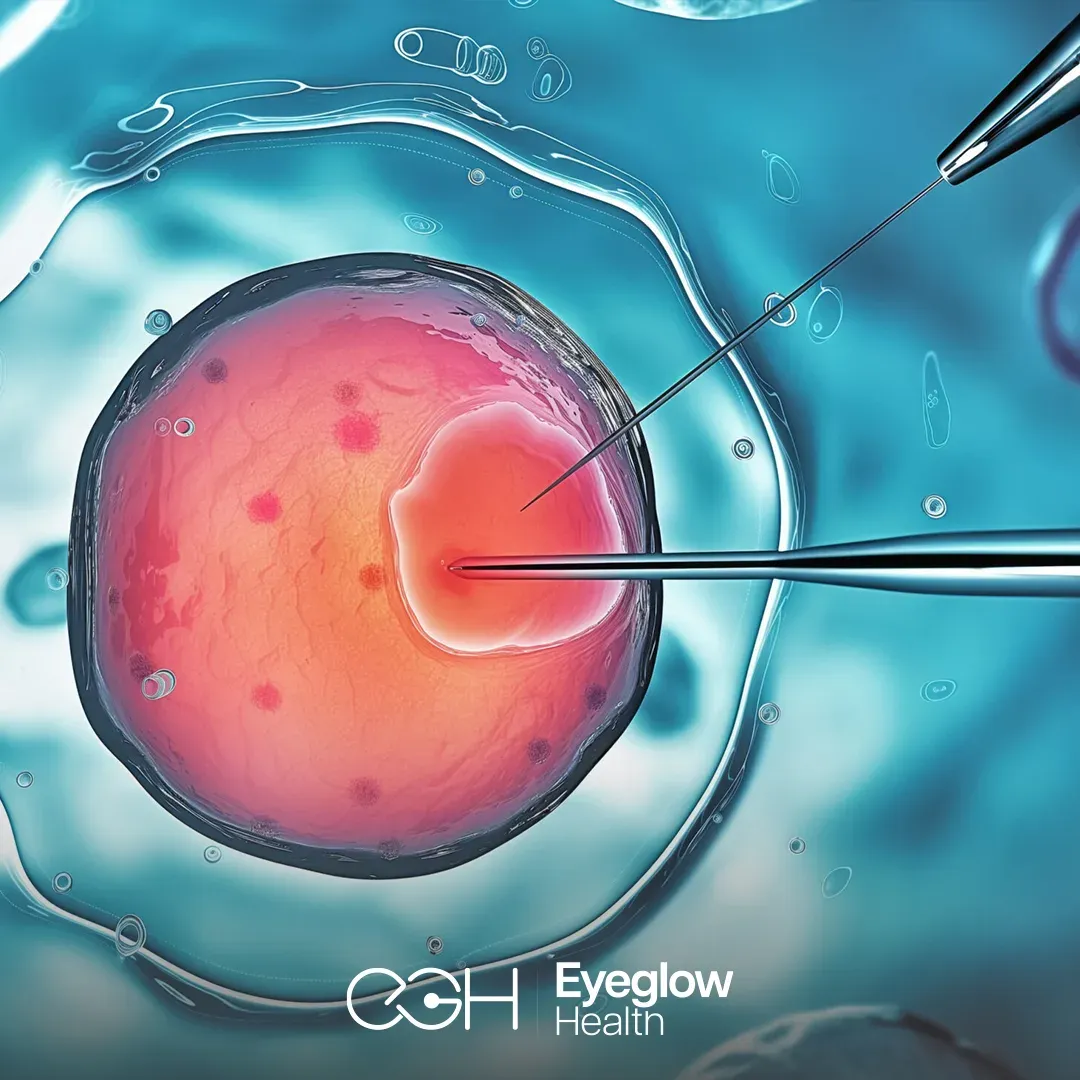
Oocyte retrieval (egg pick-up, EPU): 20–30 minute procedure under conscious sedation. Transvaginal ultrasound-guided needle aspiration of each mature follicle. Same day: semen sample from partner (or frozen sample previously deposited). Fertilisation: standard IVF inserts ~50,000 motile sperm with each egg in culture dish; ICSI uses a microinjection needle to place a single selected sperm directly into the cytoplasm of each mature egg. Embryos cultured in laboratory incubator. Day 3: cleavage-stage embryos (6–8 cells); day 5: blastocyst stage (200+ cells, inner cell mass + trophectoderm differentiation). PGT-A biopsy at blastocyst stage if indicated — 3–5 trophectoderm cells removed for genetic analysis, embryos frozen pending result.
- 06
Embryo transfer + luteal support + pregnancy test
Embryo transfer: 5-minute procedure, usually without discomfort, no anaesthesia, fine catheter through cervix into uterus under ultrasound guidance. One or two embryos transferred (Turkish law: maximum 1 embryo if woman <35, maximum 2 if woman ≥35 — strict to reduce multiple pregnancy risk). Luteal support: vaginal progesterone pessaries from day of transfer, continued until 10–12 weeks of pregnancy if positive. Pregnancy test: serum beta-hCG 10–14 days post-transfer. If positive: ultrasound at 6–7 weeks (gestational sac, fetal pole, heartbeat). If negative: rest cycle, review with specialist before next attempt. Surplus high-quality embryos can be frozen (vitrification) for future frozen embryo transfer (FET) cycles at lower cost than full repeat IVF.
IVF vs ICSI vs IUI vs FET
The right fertility pathway depends on the cause of infertility, age, and prior treatment history. Here is how the four main options differ:
| Aspect | IVF (standard) | IVF + ICSI | IUI | Frozen embryo transfer (FET) |
|---|---|---|---|---|
| When indicated | Tubal factor, unexplained, endometriosis, age-related decline | Male factor (low sperm count/motility/morphology), prior IVF fertilisation failure | Mild male factor, ovulation disorder, unexplained infertility (younger women) | Frozen embryos from prior IVF cycle, endometrial timing optimisation |
| Pregnancy rate per cycle | 30–50% age-dependent (best <35, drops sharply >40) | Similar to IVF (similar success when fertilisation is the only barrier) | 10–15% per cycle (younger women, mild factors) | Comparable to fresh transfer (often slightly better due to optimal endometrium) |
| Invasiveness | Ovarian stimulation + oocyte retrieval + embryo transfer | Same as IVF + additional embryology step | Mild — monitored ovulation + intrauterine sperm placement | No fresh stimulation; endometrial preparation + transfer only |
| Cost per cycle | High — full cycle | High — IVF + ICSI add-on | Low — minimal stimulation + insemination | Moderate — no stimulation phase |
| Multiple pregnancy risk | Controlled by single embryo transfer policy | Same as IVF | Higher (uncontrolled ovulation, twins/triplets risk) | Controlled — typically single embryo |
| Time in Istanbul | 14–21 days full cycle | Same as IVF | 5–7 days | 7–14 days (endometrial preparation) |
Personalised pricing
Every treatment plan is priced individually after your consultation. Request a written, all-inclusive quote — clear, itemised, and with no obligation.
Request a written quoteWhat's included in your IVF package
Included in package
- Pre-treatment fertility specialist consultation + treatment plan
- Female workup: ultrasound, AMH, FSH, LH, oestradiol, TSH, prolactin, vitamin D, infectious disease screen
- Male workup: full semen analysis (WHO 2021), infectious disease screen
- Ovarian stimulation medications (FSH, hMG, GnRH antagonist, trigger)
- Stimulation monitoring (transvaginal ultrasound + oestradiol every 2–3 days)
- Oocyte retrieval under conscious sedation at partner accredited fertility centre
- Fertilisation (standard IVF or ICSI as clinically indicated)
- Embryo culture to day 3 or day 5 (blastocyst)
- Embryo transfer + ultrasound guidance + luteal progesterone support medications
- Surplus embryo vitrification (freezing) — first year of storage included
- Pregnancy test (beta-hCG) + early pregnancy ultrasound if positive
- 5-star hotel — duration matched to your cycle (typically 14–21 nights)
- VIP airport transfers + clinic transfers throughout treatment
- Multilingual fertility coordinator — 24/7 throughout your cycle
- Complication insurance — covers eligible post-operative medical complications during the treatment cycle at our partner accredited fertility centre (issued in line with the Turkish Ministry of Health International Health Tourism Authority Certificate)
Paid separately or restricted by Turkish law
Items below are either not part of the medical package, or are restricted by Turkish Ministry of Health regulation regardless of provider.
- Flights to/from Istanbul (one or two visits per cycle depending on monitoring approach)
- Personal expenses + meals
- PGT-A (aneuploidy screening) or PGT-M (monogenic disease screening) — quoted separately
- Embryo storage beyond first year (annual storage fee)
- Donor egg, donor sperm or donor embryo — donor gametes are allowed in Turkey only between married heterosexual couples using their own genetic material; donor gametes from third parties are NOT permitted under Turkish law
- Surrogacy is NOT legal in Turkey (any provider — not specific to Eyeglow). If surrogacy is your only option, we cannot help in Turkey; we provide honest counselling on jurisdictions where this is legal
- Gender selection (sex selection for non-medical reasons) is NOT legal in Turkey. Pre-implantation genetic diagnosis is allowed only for serious heritable disease per Turkish Ministry of Health regulations
- Travel insurance (flight cancellation, baggage, general trip cover) — separate from the medical complication policy above; your coordinator can recommend a provider at no markup
Are you a candidate for IVF in Turkey?
You may be a good candidate if
- You are a married heterosexual couple seeking treatment with your own genetic material (own eggs, own sperm) — this is the legal framework for IVF in Turkey under Ministry of Health regulations.
- You have a confirmed or strongly suspected cause of infertility — tubal factor, male factor, anovulation, endometriosis, age-related decline, or unexplained infertility after 12+ months of trying (6+ months if woman ≥35).
- The woman is under 45 with adequate ovarian reserve (AMH typically >1.0 ng/ml is more favourable; lower values are still treatable with lower expected yield and individualised counselling).
- You can commit to 14–21 days in Istanbul for a full cycle (or shorter visits with local-country stimulation monitoring and Istanbul retrieval/transfer).
- You have realistic expectations: cumulative pregnancy rate per cycle is 30–50% in good prognosis cases, dropping sharply with female age >40; multiple cycles may be required. We provide honest age-specific success probability before any cycle is paid for.
IVF in Turkey is not appropriate if
- You require donor egg, donor sperm or donor embryo from a third party — this is NOT permitted in Turkey under Ministry of Health regulation. We provide honest counselling and refer to jurisdictions (Spain, Czech Republic, Greece, USA) where third-party donor IVF is legal.
- You require surrogacy (gestational carrier) — this is NOT legal in Turkey for any provider. We cannot help with surrogacy in Turkey; we provide honest counselling on jurisdictions where this is legal.
- You require gender selection (sex selection for non-medical reasons) — this is NOT permitted under Turkish law. Pre-implantation genetic diagnosis is allowed only for serious heritable disease.
- You are over 45 with significantly diminished ovarian reserve — expected success rate may not justify the cost and stimulation burden. Honest counselling provided before any cycle is paid.
- You have unstable mental-health concerns about pregnancy or untreated severe medical conditions that increase pregnancy risk — psychiatric and medical clearance required first.
Disclaimer. Information on this page is consistent with ASRM (American Society for Reproductive Medicine), ESHRE (European Society of Human Reproduction and Embryology) practice standards, and Turkish Ministry of Health International Health Tourism Authority + ART centre licence requirements. The Turkish legal framework for assisted reproduction (married heterosexual couple, own gametes only, single embryo transfer under 35, no surrogacy, no non-medical gender selection) applies to every provider in Turkey — not specifically to Eyeglow.
Realistic outcomes — the risks that actually matter
Every IVF cycle has measurable risks and a non-guaranteed success probability. We list them here in the same plain language our fertility specialist uses in your consultation:
Ovarian hyperstimulation syndrome (OHSS) — 1–5%
OHSS is the most recognised IVF-specific risk — an over-response to ovarian stimulation causing ovarian enlargement, abdominal fluid accumulation, and in severe cases (<1%) electrolyte disturbance, blood clotting risk and respiratory compromise. Risk factors: young age, high AMH, polycystic ovaries, high FSH dose. Modern antagonist protocol with GnRH agonist trigger (instead of hCG) and "freeze-all" embryo strategy (no fresh transfer) reduces severe OHSS risk to <1%. Mild OHSS (bloating, mild discomfort) is common and self-limiting. Our partner fertility centre monitors for OHSS risk during stimulation and adjusts protocol accordingly — patient safety is prioritised over single-cycle yield maximisation.
Realistic age-specific success rates — pregnancy rate drops sharply over age 38
IVF cumulative pregnancy rate per cycle is highly age-dependent. ASRM and ESHRE registry data (own-egg IVF, healthy general population): woman <35 — 40–50%; 35–37 — 35–40%; 38–40 — 25–30%; 41–42 — 15–20%; 43+ — under 10%. Live birth rate is lower than pregnancy rate due to miscarriage risk, which also rises with age. Multiple cycles may be required and we discuss honestly what your specific age-and-AMH probability is before any cycle is paid for. We do not market "success" without contextualising the realistic age-specific rate, because doing so leads to unmet expectations.
Multiple pregnancy risk (controlled by single embryo transfer policy)
Multiple pregnancy (twins, triplets) carries significant maternal and fetal risk — gestational diabetes, hypertension, preterm birth, neonatal intensive care requirement, long-term disability. Turkish law strictly limits embryo transfer numbers: maximum 1 embryo if woman is under 35, maximum 2 embryos if woman is 35 or older. This is more restrictive than some other jurisdictions and is part of the safety framework. Single embryo transfer policy at modern fertility centres has reduced multiple-pregnancy rate to <5% while maintaining cumulative pregnancy rate through frozen embryo transfer (FET) of surplus embryos in subsequent cycles.
Procedure-related risks of oocyte retrieval (small but real)
Oocyte retrieval is a transvaginal ultrasound-guided needle aspiration under conscious sedation. Recognised risks (per ASRM and ESHRE data, all <1%): bleeding from puncture site, infection (treated with antibiotics), inadvertent puncture of bowel or bladder (rare), ovarian torsion (rare, may occur days after retrieval if ovary is enlarged), anaesthetic risk from conscious sedation. The procedure is generally low-risk in healthy patients at experienced centres. Anaesthesia review pre-procedure and post-procedure observation for 1–2 hours are standard.