
Root Canal Treatment in Turkey — Modern Rotary Endodontics at Eyeglow Istanbul
Endodontic therapy using modern rotary NiTi instruments (ProTaper Gold, WaveOne Gold, Reciproc Blue), NaOCl irrigation activated by ultrasonics, and 3D obturation with gutta-percha and bioceramic sealer — performed under mandatory rubber dam isolation with operating microscope magnification. 86 to 98 percent success rate per AAE published data. Delivered at our partner accredited dental clinic by a board-certified dental specialist with structured aftercare.
Verified and listed across leading directories and authorities


What is root canal treatment?
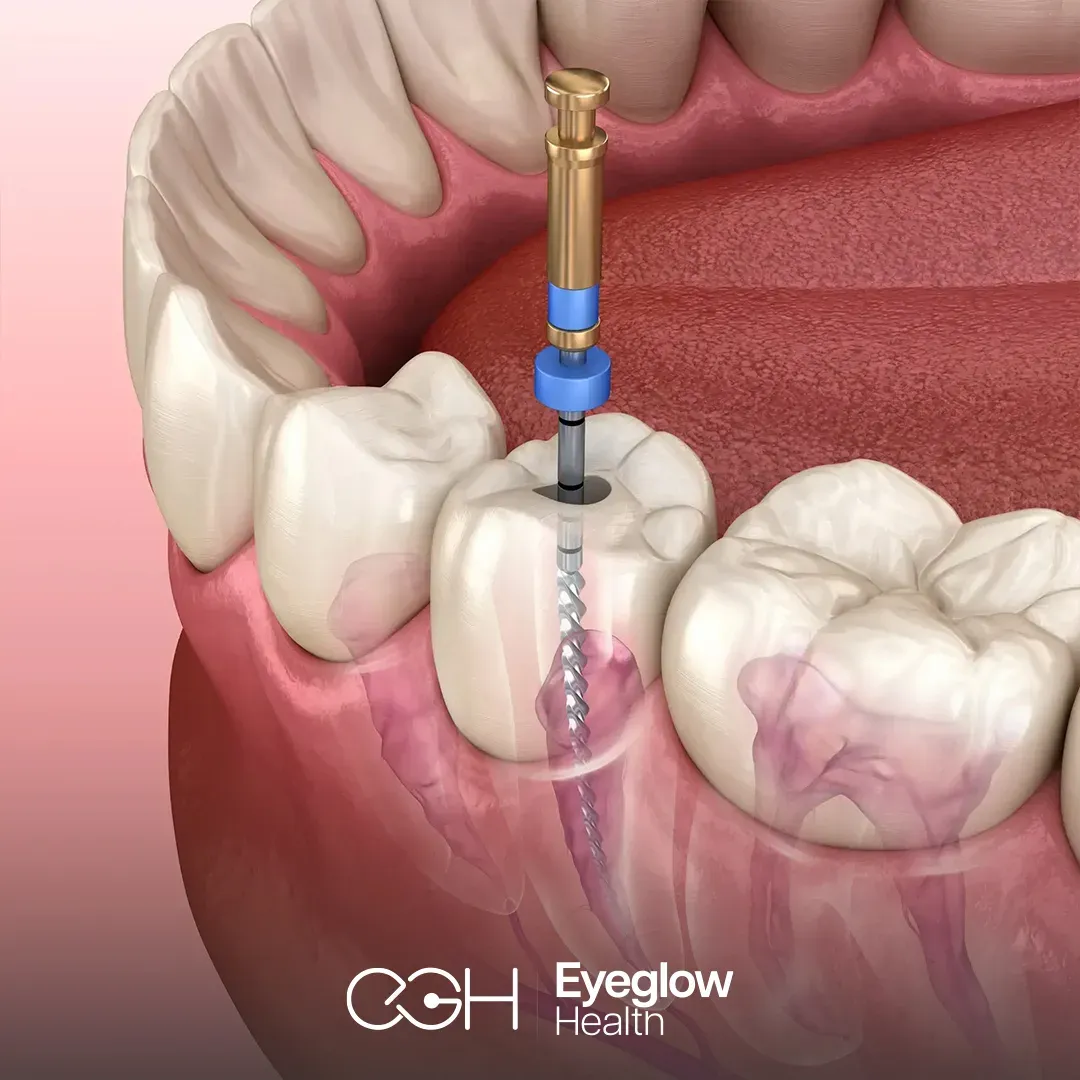
Root canal treatment (endodontic therapy) is the dental procedure that saves a tooth whose pulp tissue has become infected or irreversibly inflamed. The infected pulp is removed, the canal system is mechanically cleaned and shaped with rotary nickel-titanium (NiTi) instruments, chemically disinfected with sodium hypochlorite (NaOCl) irrigation, and 3D-sealed with gutta-percha and a bioceramic sealer. The American Association of Endodontists reports 86 to 98 percent success rates for modern primary root canal treatment.
At Eyeglow Health in Istanbul, root canal treatment is delivered at our partner accredited dental clinic by a board-certified dental specialist under mandatory rubber dam isolation with operating microscope magnification (4 to 6x). Our protocol follows American Association of Endodontists (AAE) and European Society of Endodontology (ESE) standards: modern rotary NiTi instrumentation (Dentsply Sirona ProTaper Gold, WaveOne Gold, VDW Reciproc Blue), NaOCl 3 to 5.25 percent irrigation activated by ultrasonics, EDTA 17 percent final irrigation, and bioceramic 3D obturation. The Turkish Ministry of Health International Health Tourism Authority Certificate is held by both Eyeglow and the partner dental clinic.
A definitive full-coverage crown on posterior teeth within 4 to 12 weeks is mandatory for long-term survival — this is not optional. Where logistically possible we recommend our same-day root canal + zirconia crown package so you return home with the tooth fully protected. That decision belongs to a dental specialist who has examined your tooth, taken appropriate radiographs and confirmed restorability — not to a marketing brochure or a price-list page.
From first consultation to long-term follow-up
- 01
Online consultation + symptom assessment
You share recent dental X-rays (panoramic or periapical) and a description of your symptoms (spontaneous pain, thermal sensitivity, pain on biting, swelling, sensitivity to percussion). The dental specialist at our partner accredited dental clinic reviews your case, confirms whether root canal treatment is the right indication versus extraction or simple restoration, and writes a written treatment plan including whether a same-day crown is recommended before any quote is issued.
- 02
Day 1 — clinical examination + pulpal diagnosis
On arrival in Istanbul: clinical oral examination, percussion and palpation tests, thermal (Endo-Ice CO2) and electric pulp testing where indicated, periapical and panoramic radiographs, and 3D CBCT for complex anatomy or retreatment cases. The dental specialist confirms the pulpal diagnosis using the American Association of Endodontists (AAE) terminology: reversible pulpitis, symptomatic irreversible pulpitis, asymptomatic irreversible pulpitis, pulp necrosis, or previously treated root canal failure.
- 03
Day 1 or 2 — access cavity + working length determination
Under local anaesthetic with profound pulpal anaesthesia confirmed (cold test on the tooth), rubber dam isolation is placed (mandatory in our protocol — Turkish-MoH and AAE standard of care). The dental specialist creates an access cavity through the crown of the tooth using ultrasonic and rotary instruments, locating all canal orifices under operating microscope (4 to 6x magnification). Working length is determined by electronic apex locator (Root ZX, Propex Pixi) confirmed with a working-length radiograph.
- 04
Day 1 or 2 — mechanical instrumentation + chemical disinfection
Each canal is cleaned and shaped with modern rotary nickel-titanium (NiTi) instruments — ProTaper Gold (Dentsply Sirona), WaveOne Gold reciprocating system, Reciproc Blue (VDW) or Hyflex CM. Continuous chemical irrigation with sodium hypochlorite (NaOCl 3 to 5.25 percent) dissolves organic tissue and disinfects the canal walls. Final irrigation with EDTA 17 percent removes the smear layer, and ultrasonic activation enhances disinfection in lateral canals and apical anatomy.
- 05
Day 1 or 2 — 3D obturation + temporary closure
Once the canal system is clean, dry and shaped, the canals are obturated (sealed) with gutta-percha cones and a modern bioceramic sealer (BioRoot RCS, EndoSequence BC Sealer, AH Plus Bioceramic). 3D obturation techniques include warm vertical compaction (System B / Calamus) or single-cone obturation with hydraulic bioceramic sealer — both validated by published evidence. A post-obturation radiograph confirms the seal extends to within 0.5 to 1.0 mm of the apex. A reinforced temporary filling closes the access cavity until a same-day or follow-up crown is placed.
- 06
Crown placement + 12-month structured follow-up
A definitive full-coverage crown — typically monolithic zirconia or E.max — is essential after root canal treatment on posterior teeth, ideally placed within 4 weeks (and where logistically possible during the same Istanbul visit). Post-and-core build-up may be required if substantial coronal tooth structure is missing. Photographic and radiographic review at 6 and 12 months by video. Long-term success is best assessed at 12 to 24 months by absence of symptoms and resolution or stability of any apical radiolucency.
Root canal vs Extraction + Implant vs Pulp capping vs Retreatment
The right endodontic option depends on tooth restorability, periodontal support, fracture status, and whether a previous root canal has been performed. Here is how the four main approaches differ:
| Aspect | Root canal | Extraction + implant | Pulp capping | Retreatment |
|---|---|---|---|---|
| Procedure goal | Save tooth, remove infection | Remove tooth + implant later | Preserve nerve in young teeth | Re-treat previous root canal failure |
| Anaesthesia | Local with rubber dam isolation | Local or sedation | Local | Local with rubber dam isolation |
| Number of visits | 1 visit (most cases) or 2 | 1 visit for extraction; implant 3–6 months later | 1 visit | 1–2 visits, microscope-dependent |
| Crown requirement after | Yes for posterior teeth (mandatory) | Crown on implant after 3–6 months | No (vital tooth preserved) | Yes (replace previous crown) |
| Success rate | 86–98% (AAE published cohorts) | 95–98% implant survival 5–10 years | 70–95% pulp survival | 70–86% (lower than primary RCT) |
| Cost (Eyeglow Turkey) | Request a written quote | Request a written quote | Request a written quote | Request a written quote |
| Treatment time per tooth | 60–120 min | 20–40 min extraction | 30–45 min | 90–150 min |
Personalised pricing
Every treatment plan is priced individually after your consultation. Request a written, all-inclusive quote — clear, itemised, and with no obligation.
Request a written quoteWhat's included in your root canal treatment package
Included in package
- Pre-op clinical examination + pulpal diagnosis (percussion, palpation, thermal, electric pulp tests)
- Periapical + panoramic X-ray; 3D CBCT for complex anatomy or retreatment
- Local anaesthetic with confirmed profound pulpal anaesthesia
- Rubber dam isolation (mandatory in our protocol — AAE / Turkish-MoH standard of care)
- Operating microscope magnification (4 to 6x) for canal location and instrumentation
- Modern rotary NiTi instrumentation (ProTaper Gold / WaveOne Gold / Reciproc Blue)
- NaOCl 3 to 5.25 percent chemical irrigation + EDTA 17 percent smear layer removal
- Ultrasonic irrigation activation
- 3D obturation with gutta-percha + bioceramic sealer (BioRoot / EndoSequence BC / AH Plus Bioceramic)
- Post-obturation working-length verification radiograph
- Reinforced temporary filling (or definitive build-up where placed same visit)
- 5-star hotel — 2 to 3 nights
- VIP airport transfers (return)
- Multilingual dental coordinator — 24/7
- 6 and 12-month video photographic + radiographic follow-up
- Complication insurance — covers eligible post-operative medical complications during the recovery period at our partner accredited clinic (issued in line with the Turkish Ministry of Health International Health Tourism Authority Certificate)
Paid separately
Items below are not part of the medical package — your coordinator helps you arrange them at no markup.
- Flights to/from Istanbul
- Personal expenses
- Definitive crown if not bundled in the same-day crown package (essential follow-up step — quoted separately if delivered by your local dentist)
- Surgical apicectomy or root-end surgery if non-surgical retreatment is insufficient
- Extraction and implant if the tooth is deemed unsalvageable on examination (alternative quote provided)
- Travel insurance (flight cancellation, baggage, general trip cover) — separate from the medical complication policy above; your coordinator can recommend a provider at no markup
Are you a candidate for root canal treatment?
You may be a good candidate if
- You have a deep cavity, large failed restoration, dental trauma or previously treated symptomatic root canal that has reached the pulp tissue.
- Your tooth is restorable (sufficient coronal tooth structure or planned post-and-core + crown coverage) and has periodontal bone support.
- You have classic signs of pulpitis or pulp necrosis: spontaneous pain, lingering thermal sensitivity, pain on biting, tenderness on percussion, or a draining sinus tract.
- Your dental specialist confirms a clinical and radiographic diagnosis of irreversible pulpitis, pulp necrosis, or previously treated root canal failure where retreatment is feasible.
- You meet standard endodontic candidacy: cooperative for the procedure under local anaesthetic, no medical contraindications to the brief procedure.
Extraction + implant may be smarter if
- The tooth is non-restorable (insufficient remaining tooth structure even with post-and-core) — extraction and implant is the smarter long-term choice.
- You have advanced periodontal bone loss around the same tooth — root canal alone will not save a periodontally hopeless tooth.
- You have a vertical root fracture confirmed on CBCT — these teeth are not salvageable and must be extracted.
- You expect a definitive result without a crown — posterior root-treated teeth must be crowned to prevent fracture; declining the crown invites failure.
- Your case is a complex retreatment with calcified canals or instrument fracture without microscope/CBCT access — refer-out to a specialist endodontist may be the smarter route.
Disclaimer. Information on this page is consistent with American Association of Endodontists (AAE) clinical guidelines, European Society of Endodontology (ESE) quality guidelines, American Dental Association (ADA) standards, FDI World Dental Federation policy and Turkish Ministry of Health International Health Tourism Authority Certificate requirements. The choice between root canal treatment, extraction-and-implant, or pulp capping is a case-by-case clinical decision based on tooth restorability, periodontal support and fracture status — not a marketing-driven default.
Realistic outcomes — the risks that actually matter
Every endodontic procedure has measurable risks. We list them here in the same plain language our dental specialist uses in your consultation:
Post-operative pain for 2 to 7 days
Mild to moderate discomfort for 2 to 7 days after root canal treatment is normal and is managed with paracetamol or ibuprofen taken regularly for the first 48 hours. A "flare-up" of more severe pain occurs in 5 to 15 percent of cases, particularly with previously asymptomatic necrotic teeth — managed with anti-inflammatories and rarely with a short course of antibiotics. Severe persistent pain beyond 7 days is unusual and warrants a clinical review (telehealth video appointment with our specialist) to rule out post-treatment complications.
Tooth fracture risk without timely crown
Root-canal-treated posterior teeth lose significant structural integrity after access cavity preparation. Without full-coverage crown protection within 4 to 12 weeks the fracture risk rises substantially — the tooth may split vertically and become non-restorable, requiring extraction. We strongly recommend the same-day crown package wherever possible; if your crown will be provided by your local dentist after return home, we provide written instructions and timeline guidance.
Treatment failure (apical periodontitis persistence)
Even with modern techniques, 2 to 14 percent of primary root canal treatments fail to resolve apical periodontitis on long-term follow-up (AAE published data). Causes include complex apical anatomy, untreated lateral canals, bacterial biofilm persistence, coronal leakage from inadequate final restoration, or vertical root fracture. Failed cases may be managed by non-surgical retreatment, surgical apicectomy, or extraction with implant. We discuss expected success probability for your specific tooth honestly in the consultation.
Instrument separation (file fracture)
Despite modern NiTi instruments being more flexible than older stainless steel, instrument separation (a file breaking inside the canal) occurs in 0.5 to 2 percent of cases. Most separated fragments can be retrieved with ultrasonics under the operating microscope; some remain embedded and act as a sealed inert obturation — long-term outcome data show no statistical difference in failure rate if the canal was adequately disinfected before separation. Where retrieval is unfeasible the dental specialist explains the implications and offers honest options (monitoring, surgical apicectomy, or extraction).