
PRK Laser Eye Surgery in Turkey — Flapless Surface Refractive Surgery at Eyeglow Istanbul
Photorefractive Keratectomy (classic PRK and Trans-PRK) for myopia, hyperopia and astigmatism — the flapless refractive procedure preferred for thin corneas, recurrent corneal erosion, contact-sport athletes, military personnel and aviators. Led by our refractive surgical team. Written quote and a year of structured aftercare.
Verified and listed across leading directories and authorities


What is PRK laser eye surgery?
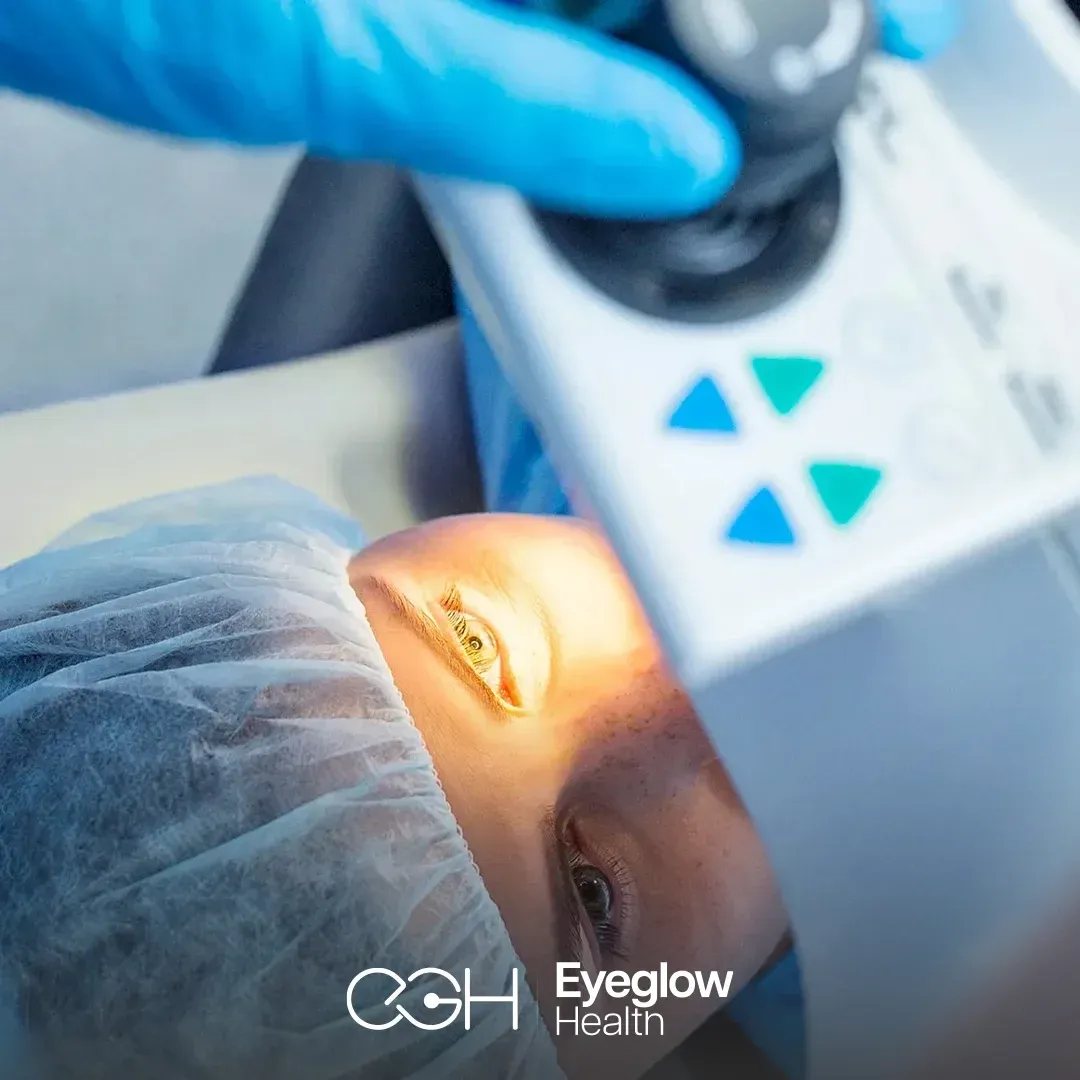
PRK (Photorefractive Keratectomy) is a flapless surface laser refractive procedure. The corneal epithelium is removed, an excimer laser reshapes the underlying stroma to correct myopia, hyperopia and astigmatism, and a bandage contact lens protects the cornea while the epithelium regenerates over 5 to 7 days.
At Eyeglow Health in Istanbul, PRK is performed with FDA-approved excimer platforms (SCHWIND AMARIS, Alcon WaveLight EX500, ZEISS MEL 90) on the same equipment used in major US and European refractive centres. PRK was the first laser refractive procedure approved by the FDA (October 1995) and remains the preferred refractive technique when LASIK is not safe: thin corneas, recurrent corneal erosion, contact-sport athletes, military aviators and patients with moderate dry eye. The US Navy and most international military aviation programmes approve PRK precisely because there is no corneal flap to dislodge under impact or rapid pressure change.
PRK has a clear trade-off: first-week comfort is lower than LASIK or SMILE because the epithelium has to regenerate (3 to 5 days of light sensitivity and grittiness are normal). The long-term outcome is excellent and the cornea retains more residual stromal bed than after LASIK — which matters if you ever need a future enhancement or have biomechanical reserve concerns. That assessment belongs to a surgeon who has personally reviewed your Pentacam, pachymetry and tear film — not to a marketing brochure.
From first consultation to recovery at home
- 01
Online consultation
You share recent prescription history, any prior corneal injury or recurrent corneal erosion, and your occupation (especially relevant for athletes, military and aviators). Our refractive surgical team reviews your case and confirms whether PRK is appropriate over LASIK or SMILE — particularly important when your cornea is thin or you are exposed to facial impact risk.
- 02
Pre-operative imaging in Istanbul
On day 1 we measure Pentacam Scheimpflug topography, ultrasound or OCT pachymetry, wavefront aberrometry, dry eye and tear film evaluation, and pupil dynamics. PRK preserves more corneal stroma than LASIK (no flap = no stromal bed thinning) and is often the right choice when pachymetry is borderline. Soft contact lenses stopped one week before; rigid lenses three weeks before.
- 03
Personalised treatment plan
Our refractive surgical team reviews your imaging with you and confirms which PRK protocol — classic PRK (alcohol epithelial removal) or Trans-PRK (single-step laser epithelial removal with no alcohol or blade) — and the expected refractive outcome before you sign consent.
- 04
The procedure (5–10 minutes per eye)
Both eyes are typically treated in the same session. The corneal epithelium is removed (alcohol-assisted in classic PRK; single-step laser in Trans-PRK using SCHWIND AMARIS or similar excimer platform), the excimer laser ablates the underlying stroma to correct the refractive error, mitomycin C is applied for ~30 seconds to reduce post-op haze risk in higher corrections, and a bandage contact lens is placed to protect the cornea during epithelial healing.
- 05
Day 1, day 5, day 14 reviews
The first 3 to 5 days are uncomfortable — light sensitivity, foreign-body sensation and intermittent stinging are normal while the epithelium regenerates. We provide cold artificial tears, NSAID drops and protective sunglasses. The bandage contact lens is removed at day 5 to 7 once the epithelium has closed. Functional vision returns gradually over 1 to 2 weeks; sharp distance vision typically settles by 3 to 4 weeks.
- 06
One-year structured aftercare
Scheduled video reviews at one, three, six and twelve months. Final refractive result is judged at 6 months once corneal remodelling completes. Your coordinator stays the same throughout.
PRK vs LASIK vs SMILE vs ICL
PRK is one of four refractive pathways at Eyeglow. The right choice depends on corneal thickness, occupation, comfort tolerance and reversibility preference:
| Aspect | PRK | LASIK | SMILE | EVO ICL |
|---|---|---|---|---|
| Corneal flap | No — surface only | Yes (femto-cut flap) | No — small 2–4 mm incision | No — corneal tissue preserved |
| Suitable for thin cornea | Best surface option | Limited | Better than LASIK | Cornea-preserving |
| Suitable for recurrent erosion | Yes — therapeutic option | No — increased risk | Limited evidence | Not applicable |
| Suitable for contact-sport / military | Preferred — no flap to dislodge | Often restricted | Preferred | Preferred (intraocular) |
| First-week comfort | Uncomfortable 3–5 days | Most comfortable | Comfortable | Comfortable |
| Visual recovery time | 7–14 days functional, 3–4 weeks sharp | 24–48 hours | 1–3 days | 24 hours |
| Long-term outcome (>5 yr) | Excellent — most stable corneal biomechanics | Excellent | Excellent | Excellent |
PRK pricing
All-inclusive Eyeglow package pricing. Your final, personalised quote is confirmed after imaging review — with no obligation.
| Procedure | Eyeglow price (all-inclusive) |
|---|---|
| PRK Laser Eye Surgery — both eyes, all-inclusive | from €1,000 |
What's included in your PRK package
Included in package
- Pre-op imaging (Pentacam, pachymetry, wavefront, dry eye, tear film)
- Surgeon-led consultation (our refractive surgical team)
- Classic PRK, Trans-PRK or Wavefront-guided PRK (both eyes)
- Mitomycin C application for haze prevention (in higher corrections)
- VIP airport transfers (return)
- Bandage contact lens, NSAID drops, lubricant drops + aftercare kit
- Protective sunglasses (UV-blocking) for first 6 months
- Day-1, day-5, day-14, 1m, 3m, 6m, 12m follow-up reviews
- Multilingual coordinator — 24/7
Paid separately
Items below are not part of the medical package — your coordinator helps you arrange them at no markup.
- Flights to/from Istanbul
- Personal expenses
- Optional enhancement procedure beyond 12 months
- Unrelated medical treatments
- Travel insurance (flight cancellation, baggage, general trip cover); your coordinator can recommend a provider at no markup
The surgeons who will care for you
Your procedure is carried out by our refractive surgical team at our partner accredited hospital in Istanbul. Their training and sub-specialty focus are shown below.
Medically reviewed byAssoc. Prof. Dr. Muhammet Derda Özer, FICO

Assoc. Prof. Dr. Muhammet Derda Özer, FICO
Operating Surgeon
Specialises in ocular oncology, vitreoretinal diseases, cataract, refractive, corneal transplantation, glaucoma and pediatric ophthalmic surgery — more than 30,000 ophthalmic operations across a 14-year clinical career.
View full profile
Op. Dr. Önder Aslan
Operating Surgeon
Board-certified ophthalmologist whose surgical practice spans anterior-segment procedures with oculoplastic and retinal sub-specialties — cataract, refractive, eyelid surgery and pediatric eye examinations including retinopathy of prematurity.
View full profile
Op. Dr. Muhammed Talha Sadık
Operating Surgeon
Board-certified ophthalmologist working across vitreoretinal disease, refractive, cataract and glaucoma surgery, with an active anterior- and posterior-segment surgical caseload.
View full profileAre you a candidate for PRK?
You may be a good candidate if
- You are over 18 with a stable prescription for at least one year.
- Your prescription is within an established range (typically up to –8 D myopia, +3 D hyperopia, 4 D astigmatism).
- Your cornea is too thin for safe LASIK — PRK preserves more stromal bed.
- You have a history of recurrent corneal erosion — PRK is both refractive and therapeutic.
- You are an athlete, soldier, aviator or in any occupation with eye-impact or flap-dislocation risk.
- You have moderate dry eye that excludes flap-based refractive surgery.
A different pathway may be safer if
- You need fast visual recovery (e.g. business trip in 2 weeks) — LASIK or SMILE more appropriate.
- You have signs of keratoconus or other progressive ectasia — cross-linking comes first.
- You have very high myopia above –10 D — ICL is the more durable option.
- You have severe untreated dry eye, active corneal disease, or significant ocular surface disease.
- You cannot accept 3–5 days of post-op discomfort — LASIK or SMILE have a more comfortable first week.
- Pregnancy or breastfeeding — PRK is postponed.
Disclaimer. Information on this page is consistent with FDA PRK approvals (October 1995 onwards), American Academy of Ophthalmology (AAO) Refractive Surgery Preferred Practice Pattern, American Society of Cataract & Refractive Surgery (ASCRS) consensus, and US Department of Defense PRK outcome data (US Navy / US Air Force aviator refractive surgery programmes). It is educational and not a clinical recommendation. The only reliable way to know whether PRK is the right option for you is a surgeon-reviewed evaluation based on Pentacam topography, pachymetry, wavefront aberrometry and tear film evaluation.
Realistic outcomes — the risks that actually matter
Every refractive procedure has measurable risks. We list them here in the same plain language our surgical team uses in your consultation:
First-week pain and light sensitivity
PRK's defining trade-off. Days 1 to 3 are uncomfortable as the corneal epithelium regenerates. Managed with cold artificial tears, NSAID drops, oral analgesia and protective sunglasses. By day 5 to 7 the epithelium has closed and the bandage contact lens is removed; comfort improves rapidly thereafter.
Corneal haze
Stromal haze occurs in 1 to 5 percent of higher corrections — visible on slit-lamp examination but rarely affecting vision. Mitomycin C application during surgery (in corrections above –6 D) reduces haze incidence to <2%. Most haze resolves with topical steroids; persistent visually significant haze is rare.
Slow visual recovery
Functional vision returns by day 7 to 14; sharp 6/6 vision settles by 4 to 8 weeks. This is the trade-off for not creating a corneal flap. The final refractive result is judged at 6 months, not at 1 month.
Residual refractive error
Approximately 3 percent of patients require an enhancement procedure within 12 months.