
Blepharoplasty & Oculoplastic Surgery in Turkey — Eyelid, Ptosis and Lacrimal Repair at Eyeglow Istanbul
Functional and aesthetic eyelid surgery — upper and lower blepharoplasty, ptosis repair, entropion and ectropion correction, and dacryocystorhinostomy (DCR) for lacrimal obstruction. Every case is reviewed by our oculoplastic surgical team and operated on by an oculoplastic-trained ophthalmic surgeon at our partner accredited hospital. Written quote and a year of photographic follow-up.
Verified and listed across leading directories and authorities


What is blepharoplasty & oculoplastic surgery?
Blepharoplasty is eyelid surgery to remove or reposition excess skin, muscle and fat from the upper and / or lower eyelids — to restore a rested appearance and, in many upper-lid cases, to expand the visual field obscured by hooding. Oculoplastic surgery is the broader specialty covering blepharoplasty, ptosis repair, entropion / ectropion correction, and lacrimal drainage surgery (DCR) — performed by surgeons trained in both ophthalmology and reconstructive eyelid technique.
At Eyeglow Health in Istanbul, oculoplastic procedures are reviewed by our oculoplastic surgical team and operated on by an oculoplastic-trained ophthalmic surgeon at our partner accredited hospital. The pathway is consistent with American Society of Ophthalmic Plastic & Reconstructive Surgery (ASOPRS) standards and Royal College of Ophthalmologists (RCO) UK oculoplastic guidelines.
Oculoplastic procedures are highly individual — the right combination of blepharoplasty, ptosis repair, brow position assessment and skin / fat redistribution depends on margin reflex distance, levator function, dry eye status and your specific goals. That assessment belongs to a surgeon who has personally measured your lid anatomy and reviewed standardised photographs, not to a marketing brochure.
From first consultation to recovery at home
- 01
Online oculoplastic review
You share recent photographs (frontal and lateral, eyes open and gently closed), a brief description of your goals (functional vs aesthetic), and any medical history of dry eye, thyroid eye disease, prior eyelid surgery or systemic conditions. Our oculoplastic team reviews your case and confirms which combination of procedures is appropriate — and which may not be needed — before a quote is issued.
- 02
Pre-operative imaging and measurement in Istanbul
On day 1 we measure margin reflex distance (MRD1, MRD2), levator function, palpebral fissure height, brow position, dry eye / tear film evaluation, and photograph the eyelids in nine standardised positions. These measurements determine whether you need a functional ptosis repair, a cosmetic blepharoplasty, or a combined approach — and how much skin or fat should be removed.
- 03
Personalised surgical plan
Our oculoplastic surgical team walks you through the plan in plain language: which incisions will be used (upper eyelid crease, transconjunctival lower lid, external skin), whether levator advancement or Müller muscle resection will be performed for ptosis, and what aftercare schedule applies. You sign consent only after every question has been answered.
- 04
The procedure (45–90 minutes per eye)
Performed under local anaesthetic with light intravenous sedation. Upper blepharoplasty: a hidden incision in the upper lid crease, excess skin and a conservative amount of orbicularis muscle and prolapsed fat removed, closure with fine 6/0 polypropylene sutures. Lower blepharoplasty: transconjunctival fat repositioning (no external scar) or external subciliary incision when skin removal is needed. Ptosis repair: levator advancement or Müller muscle conjunctival resection (MMCR) according to levator function.
- 05
Day 1, day 5 and day 14 reviews
Cold compresses every 2 hours for 48 hours, head elevation when sleeping for 7 days. Stitches removed at day 5 to 7. Bruising peaks at day 3 and resolves over 10 to 14 days; mild swelling persists for 4 to 6 weeks. Most patients are presentable for social occasions by day 10 to 14 and back to full activity by week 3.
- 06
One-year structured aftercare
Scheduled photographic reviews at one, three, six and twelve months. The final aesthetic and functional outcome is judged at 6 to 12 months once all swelling resolves and scars mature. Your coordinator stays the same throughout. If a touch-up is ever needed (rare, <5%), pricing is discussed openly — there is no obligation.
Upper vs lower blepharoplasty vs ptosis vs DCR
The right combination depends on what you want corrected. Here is how the four core oculoplastic procedures differ:
| Aspect | Upper blepharoplasty | Lower blepharoplasty | Ptosis repair | DCR (lacrimal) |
|---|---|---|---|---|
| Procedure | Upper blepharoplasty | Lower blepharoplasty | Ptosis repair | DCR (lacrimal) |
| Treats | Excess upper lid skin, hooding, heavy lids | Lower lid bags, dark circles, fat herniation | Droopy upper eyelid blocking vision | Blocked tear duct, watering eye |
| Incision | Hidden in upper lid crease | Transconjunctival (no external scar) or subciliary | Through upper lid crease | External (skin) or endonasal (no scar) |
| Anaesthesia | Local + sedation | Local + sedation | Local + sedation | General or sedation |
| Recovery time | 7–10 days | 10–14 days | 7–10 days | 7–14 days |
| Functional or cosmetic | Both — visual field improvement when hooding severe | Primarily cosmetic | Functional (visual field) | Functional (drainage) |
| Result longevity | 10–15 years typical | 10–15 years typical | Permanent (anatomic correction) | 90–95% patency long-term |
Personalised pricing
Every treatment plan is priced individually after your consultation and imaging review. Request a written, all-inclusive quote — clear, itemised, and with no obligation.
Request a written quoteWhat's included in your oculoplastic package
Included in package
- Pre-op consultation + 9-view photographic documentation
- Margin reflex distance, levator function and dry eye assessment
- Oculoplastic-led surgical plan review
- Blepharoplasty / ptosis / DCR procedure as planned (both eyes if applicable)
- VIP airport transfers (return)
- Cold compress kit, post-op drops, ointment + scar care kit
- Suture removal at day 5–7 in clinic
- Day-1, day-5, day-14, 1m, 3m, 6m, 12m photographic follow-up
- Multilingual coordinator — 24/7
Paid separately
Items below are not part of the medical package — your coordinator helps you arrange them at no markup.
- Flights to/from Istanbul
- Personal expenses
- Browpexy or brow lift — quoted separately if recommended alongside upper blepharoplasty
- Non-surgical adjuncts (botulinum toxin, dermal fillers, laser resurfacing) — quoted on the day if you choose to add them
- Touch-up procedure beyond 12 months — pricing discussed openly if ever needed
- Unrelated medical treatments
- Travel insurance (flight cancellation, baggage, general trip cover); your coordinator can recommend a provider at no markup
The surgeons who will care for you
Your procedure is carried out by our oculoplastic surgical team at our partner accredited hospital in Istanbul. Their training and sub-specialty focus are shown below.
Medically reviewed byAssoc. Prof. Dr. Muhammet Derda Özer, FICO
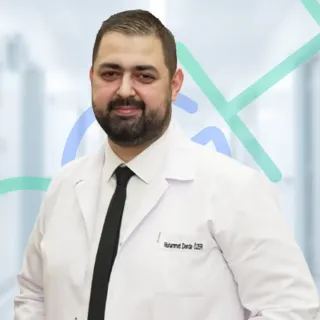
Assoc. Prof. Dr. Muhammet Derda Özer, FICO
Operating Surgeon
Specialises in ocular oncology, vitreoretinal diseases, cataract, refractive, corneal transplantation, glaucoma and pediatric ophthalmic surgery — more than 30,000 ophthalmic operations across a 14-year clinical career.
View full profile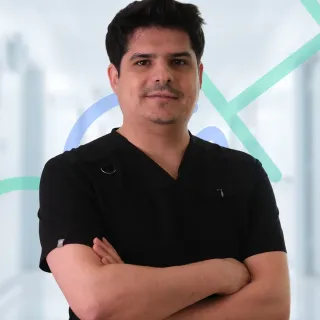
Op. Dr. Önder Aslan
Operating Surgeon
Board-certified ophthalmologist whose surgical practice spans anterior-segment procedures with oculoplastic and retinal sub-specialties — cataract, refractive, eyelid surgery and pediatric eye examinations including retinopathy of prematurity.
View full profile
Op. Dr. Muhammed Talha Sadık
Operating Surgeon
Board-certified ophthalmologist working across vitreoretinal disease, refractive, cataract and glaucoma surgery, with an active anterior- and posterior-segment surgical caseload.
View full profileAre you a candidate for blepharoplasty or oculoplastic surgery?
You may be a good candidate if
- You have visible excess upper-eyelid skin causing functional hooding, heaviness, or a tired appearance.
- You have prominent lower lid bags or fat herniation that do not respond to non-surgical treatment.
- You have a droopy upper eyelid (ptosis) blocking part of your visual field — confirmed on margin reflex distance measurement.
- You have entropion (inward-turning lid) or ectropion (outward-turning lid) causing chronic irritation, tearing or corneal exposure.
- You have a watering eye from a blocked nasolacrimal duct and want a permanent surgical correction (DCR).
- You are in general good health, non-smoker (or able to stop smoking 4 weeks before surgery) and have realistic expectations about scar healing and result longevity.
A different pathway may be safer if
- Active thyroid eye disease (Graves orbitopathy) — must be stable for at least 6 months before any cosmetic eyelid surgery.
- Severe untreated dry eye — eyelid surgery may worsen tear film and exposure; needs dry eye optimisation first.
- Unrealistic expectations or body dysmorphic concerns — we will decline the procedure if a thorough consultation suggests surgery is unlikely to satisfy you.
- Uncontrolled diabetes, hypertension or bleeding disorders — surgical risk needs to be reduced before booking.
- Pregnancy or breastfeeding — elective eyelid surgery is postponed.
Disclaimer. Information on this page is consistent with American Society of Ophthalmic Plastic & Reconstructive Surgery (ASOPRS) standards, American Academy of Ophthalmology (AAO) Oculofacial Plastic & Orbital Surgery Preferred Practice Pattern, American Society of Plastic Surgeons (ASPS) blepharoplasty data, and Royal College of Ophthalmologists (RCO) oculoplastic guidelines. It is educational and not a clinical recommendation. The only reliable way to know which combination of procedures is right for you is a surgeon-led assessment based on standardised photography, margin reflex distance measurement, levator function and tear film evaluation.
Realistic outcomes — the risks that actually matter
Every eyelid procedure has measurable risks. We list them here in the same plain language our surgical team uses in your consultation:
Bruising and swelling
Expected, not a complication. Bruising peaks at day 3 and resolves over 10 to 14 days; mild swelling persists for 4 to 6 weeks. Most patients are presentable for social events by day 10 to 14.
Asymmetric healing
Mild asymmetry between the two eyelids is the most common cause of touch-up requests (<5% of cases). Most asymmetries resolve as scars mature over 6 to 12 months; persistent significant asymmetry can be revised in a short outpatient procedure.
Lower lid retraction (ectropion or scleral show)
Less than 3% with modern transconjunctival technique. Risk is higher with aggressive skin removal in lower blepharoplasty. We use conservative skin pinch technique and orbicularis suspension when needed to protect lower lid position.
Dry eye symptoms
Transient dry eye is common in the first 4 to 6 weeks; persistent dry eye affects fewer than 5 percent and is more common when pre-existing dry eye was inadequately treated before surgery — which is why we always assess tear film before booking.