
Glaucoma Surgery in Turkey — Trabeculectomy, Tube Shunt and MIGS at Eyeglow Istanbul
Trabeculectomy — the most common glaucoma filtration surgery — together with tube shunt implants (Ahmed Glaucoma Valve, Baerveldt Glaucoma Implant) and minimally invasive glaucoma surgery (MIGS) to lower intraocular pressure when drops and laser are no longer enough. Every case is reviewed by our glaucoma surgical team and operated on by a glaucoma-trained ophthalmic surgeon at our partner accredited hospital. Day-case surgery, written quote and a year of structured IOP and OCT follow-up.
Verified and listed across leading directories and authorities


What is glaucoma surgery?
Glaucoma surgery lowers intraocular pressure (IOP) to slow or halt damage to the optic nerve when drops and laser are not enough. The most common operation is trabeculectomy, a filtration surgery that creates a guarded drainage channel under the conjunctiva. Tube shunt implants (Ahmed Glaucoma Valve, Baerveldt Glaucoma Implant) are used in complex or refractory eyes, and MIGS (Minimally Invasive Glaucoma Surgery — iStent, Hydrus, XEN gel stent, Kahook Dual Blade) is used in milder disease, often combined with cataract surgery.
At Eyeglow Health in Istanbul, glaucoma surgery is coordinated by our glaucoma surgical team and performed by a glaucoma-trained ophthalmic surgeon at our partner accredited hospital. Surgery takes approximately 45 minutes under local or general anaesthesia, as a day case with no overnight hospital stay. Our pathway is consistent with American Academy of Ophthalmology (AAO) Primary Open-Angle Glaucoma Preferred Practice Pattern and American Glaucoma Society (AGS) consensus.
Glaucoma is a chronic, lifelong condition. Eyeglow can deliver second-opinion review, glaucoma surgery in Istanbul, and a transferable treat-to-target IOP plan — but we are honest that lifelong monitoring is best continued with an ophthalmologist at home. That assessment belongs to a clinician who has personally reviewed your IOP history, optic nerve OCT and visual field — not to a marketing brochure.
From first consultation to ongoing care
- 01
Online glaucoma review
You share your most recent intraocular pressure (IOP) measurements, visual field test (Humphrey or Octopus), optic nerve OCT (RNFL and ganglion cell analysis), gonioscopy notes, current eye drop regimen and any prior glaucoma surgery or laser treatment. Our glaucoma surgical team reviews your case and confirms the glaucoma type (primary open-angle, narrow-angle, pigmentary, pseudoexfoliative, secondary), severity and the appropriate surgical step — trabeculectomy, tube shunt or MIGS — before a quote is issued.
- 02
Pre-operative imaging in Istanbul
On day 1 we repeat IOP (Goldmann applanation, multiple times of day), corneal pachymetry, gonioscopy (anterior chamber angle), optic nerve OCT, visual field test, and anterior segment OCT. These confirm the glaucoma severity and identify the optimal surgical pathway.
- 03
Personalised surgical plan
Our glaucoma surgical team explains the plan: trabeculectomy — the most common filtration surgery, creating a guarded drainage channel to lower IOP — for most cases where drops and/or laser have not controlled pressure; a tube shunt (Ahmed Glaucoma Valve, Baerveldt Glaucoma Implant) for failed trabeculectomy or complex secondary glaucoma; or a MIGS device (iStent, Hydrus, XEN gel stent, Kahook Dual Blade) for milder disease, often combined with cataract surgery. You sign consent only after every question has been answered.
- 04
The surgery (about 45 minutes)
Trabeculectomy: under local or general anaesthesia, a partial-thickness scleral flap is created and a small piece of trabecular meshwork is removed, so aqueous humour drains into a controlled filtering bleb under the conjunctiva — antifibrotics (mitomycin C) are applied to keep the channel open. Tube shunt: a silicone tube is implanted to drain aqueous to an equatorial plate reservoir, used in complex or refractory eyes. MIGS: a micro-stent or goniotomy enhances the eye's natural outflow through a 2–3 mm incision, usually combined with cataract surgery. Surgery takes approximately 45 minutes and is performed as a day case — no overnight hospital stay.
- 05
Post-operative reviews in Istanbul
You are reviewed the morning after surgery and again before flying home. IOP, the bleb (after trabeculectomy) and the anterior chamber are checked at each visit. Mild redness, light sensitivity and a transient IOP change are normal in the first days and managed with topical medication and, after filtering surgery, suture adjustment or bleb needling if required. Most international patients stay around 5 days in Istanbul for the early reviews.
- 06
One-year structured aftercare
Scheduled reviews at one, three, six and twelve months with IOP measurement, visual field test and optic nerve OCT comparison. Glaucoma is a chronic condition — even after successful surgery, lifelong monitoring is required. We provide a written treat-to-target IOP plan transferable to your home ophthalmologist for ongoing surveillance.
Trabeculectomy vs Tube Shunt vs MIGS
The right operation depends on your glaucoma type, severity and prior treatment. Here is how the three main surgical options differ:
| Aspect | Trabeculectomy | Tube shunt | MIGS |
|---|---|---|---|
| Best for | Most cases where drops/laser fail; moderate-to-advanced glaucoma | Failed trabeculectomy, neovascular or complex secondary glaucoma | Mild-to-moderate glaucoma, often combined with cataract surgery |
| How it works | Guarded drainage channel under the conjunctiva (filtering bleb) | Silicone tube drains aqueous to an equatorial plate reservoir | Micro-stent or goniotomy enhances natural trabecular outflow |
| IOP reduction | 30–50% (to a low target IOP) | 30–50% (durable in complex eyes) | 20–35% |
| Procedure setting | Operating theatre, day case | Operating theatre, day case | Operating theatre, day case (often with cataract) |
| Recovery time | 2–6 weeks intensive review | 2–6 weeks intensive review | 1 week (or per cataract recovery) |
| Success (target IOP) | 70–90% with adjunctive medication | 70–85% in complex/refractory eyes | 70–80% at 5 years, fewer drops |
Personalised pricing
Every treatment plan is priced individually after your consultation and imaging review. Request a written, all-inclusive quote — clear, itemised, and with no obligation.
Request a written quoteWhat's included in your glaucoma surgery package
Included in package
- Pre-op imaging (IOP, gonioscopy, pachymetry, optic nerve OCT, visual field, anterior segment OCT)
- Glaucoma consultation + treatment plan review
- Trabeculectomy / tube shunt / MIGS procedure as planned
- VIP airport transfers (return)
- All post-op drops + aftercare kit
- Day-1, day-7, 1m, 3m, 6m, 12m IOP and OCT review
- Written treat-to-target IOP plan for continuation at your home clinic
- Multilingual glaucoma coordinator — 24/7
Paid separately
Items below are not part of the medical package — your coordinator helps you arrange them at no markup.
- Flights to/from Istanbul
- Personal expenses
- Lifelong glaucoma drops (continued at home, prescribed by your local ophthalmologist)
- Second glaucoma procedure if needed after 12 months — quoted separately
- Cataract surgery if standalone (combined cataract + MIGS quoted as bundle above)
- Unrelated medical treatments
- Travel insurance (flight cancellation, baggage, general trip cover); your coordinator can recommend a provider at no markup
The surgeons who will care for you
Your procedure is carried out by our glaucoma surgical team at our partner accredited hospital in Istanbul. Their training and sub-specialty focus are shown below.
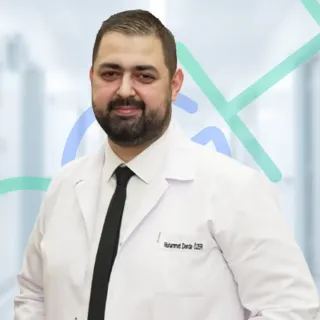
Medically reviewed byAssoc. Prof. Dr. Muhammet Derda Özer, FICO
Assoc. Prof. Dr. Muhammet Derda Özer, FICO
Operating Surgeon
Specialises in ocular oncology, vitreoretinal diseases, cataract, refractive, corneal transplantation, glaucoma and pediatric ophthalmic surgery — more than 30,000 ophthalmic operations across a 14-year clinical career.
View full profile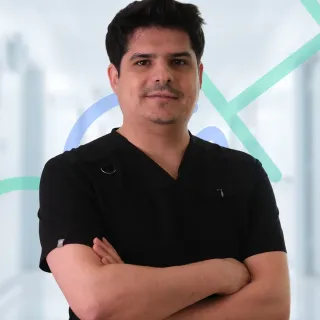
Op. Dr. Önder Aslan
Operating Surgeon
Board-certified ophthalmologist whose surgical practice spans anterior-segment procedures with oculoplastic and retinal sub-specialties — cataract, refractive, eyelid surgery and pediatric eye examinations including retinopathy of prematurity.
View full profile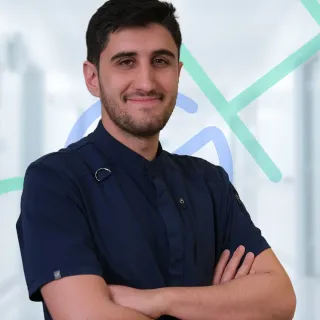
Op. Dr. Muhammed Talha Sadık
Operating Surgeon
Board-certified ophthalmologist working across vitreoretinal disease, refractive, cataract and glaucoma surgery, with an active anterior- and posterior-segment surgical caseload.
View full profileAre you a candidate for glaucoma surgery?
You may be a good candidate if
- You have a diagnosis of primary open-angle glaucoma (POAG), narrow-angle glaucoma, pseudoexfoliative or pigmentary glaucoma confirmed by an ophthalmologist with optic nerve OCT and visual field testing.
- You are intolerant to glaucoma eye drops (allergy, ocular surface disease) or have poor adherence, and your pressure is not adequately controlled — surgery can give more durable IOP control than drops.
- Your glaucoma is progressing despite maximal eye drops and prior laser treatment — filtration surgery (trabeculectomy or tube shunt) is the indicated next step.
- You have mild-to-moderate POAG with co-existing cataract — combined cataract + MIGS (iStent, Hydrus) is a single-stage treatment option.
- You have failed maximal medical therapy or your visual field is progressing despite drops — MIGS or filtering surgery may be needed.
A different pathway may be safer if
- Advanced glaucoma with end-stage visual field loss — surgical risk outweighs benefit; supportive low-vision care more appropriate.
- Uncontrolled inflammation, active uveitis or untreated ocular surface disease — must be optimised first.
- Inability to return for adequate follow-up — glaucoma is a chronic disease requiring lifelong IOP monitoring.
- Acute angle-closure attack requiring emergency intervention — should be treated in your nearest emergency hospital, not via medical tourism.
- Pregnancy — elective procedures postponed; some glaucoma medications also need adjustment.
Disclaimer. Information on this page is consistent with American Academy of Ophthalmology (AAO) Primary Open-Angle Glaucoma Preferred Practice Pattern, American Glaucoma Society (AGS) consensus, and FDA approvals of glaucoma surgical devices including iStent (Glaukos 2012), Hydrus (Ivantis 2018), XEN gel stent (Allergan 2016), Kahook Dual Blade (New World Medical 2015) and the Ahmed and Baerveldt glaucoma drainage implants. It is educational and not a clinical recommendation. The only reliable way to know which procedure is right for you is an ophthalmologist-led assessment based on IOP, gonioscopy, optic nerve OCT and visual field testing.
Realistic outcomes — the risks that actually matter
Every glaucoma procedure has measurable risks. We list them here in the same plain language our surgical team uses in your consultation:
Transient IOP change
An early pressure spike or, after filtration surgery, a period of low pressure (hypotony) can occur in the first days — managed with topical medication and, where needed, suture adjustment or bleb needling. We measure IOP at multiple timepoints after surgery and adjust treatment accordingly.
Insufficient IOP reduction
Surgery reaches target IOP in approximately 70 to 90 percent of cases when adjunctive medication is included; the remainder may require additional drops, bleb revision or a further procedure. MIGS gives a 20–35% reduction with fewer drops; trabeculectomy and tube shunts achieve lower target pressures in more advanced disease.
Hyphaema (microscopic bleeding)
Mild anterior chamber bleeding can occur after MIGS, particularly Kahook Dual Blade or stent placement — typically resolves spontaneously within 5 to 7 days. Significant hyphaema requiring intervention is rare (<2%).
Filtering bleb complications (trabeculectomy)
Trabeculectomy adds bleb-specific risks: hypotony (low pressure), bleb leak, bleb infection (blebitis) and late endophthalmitis. These are why milder disease is treated with MIGS where possible and filtration surgery is reserved for cases that need a lower target pressure. With careful surgical technique published complication rates are 5–10%.