
Keratoconus & Cornea Treatment in Turkey — Cross-Linking, Intacs and DALK at Eyeglow Istanbul
Cornea-specialist-led keratoconus and corneal disease management with FDA-approved Avedro KXL cross-linking, Keraring and Intacs ring segments, Athens Protocol (CXL + topography-guided PRK) and DALK transplant. Every case is reviewed by our cornea specialist team and includes a written quote and a year of structured Pentacam follow-up.
Verified and listed across leading directories and authorities


What is keratoconus & cornea treatment?
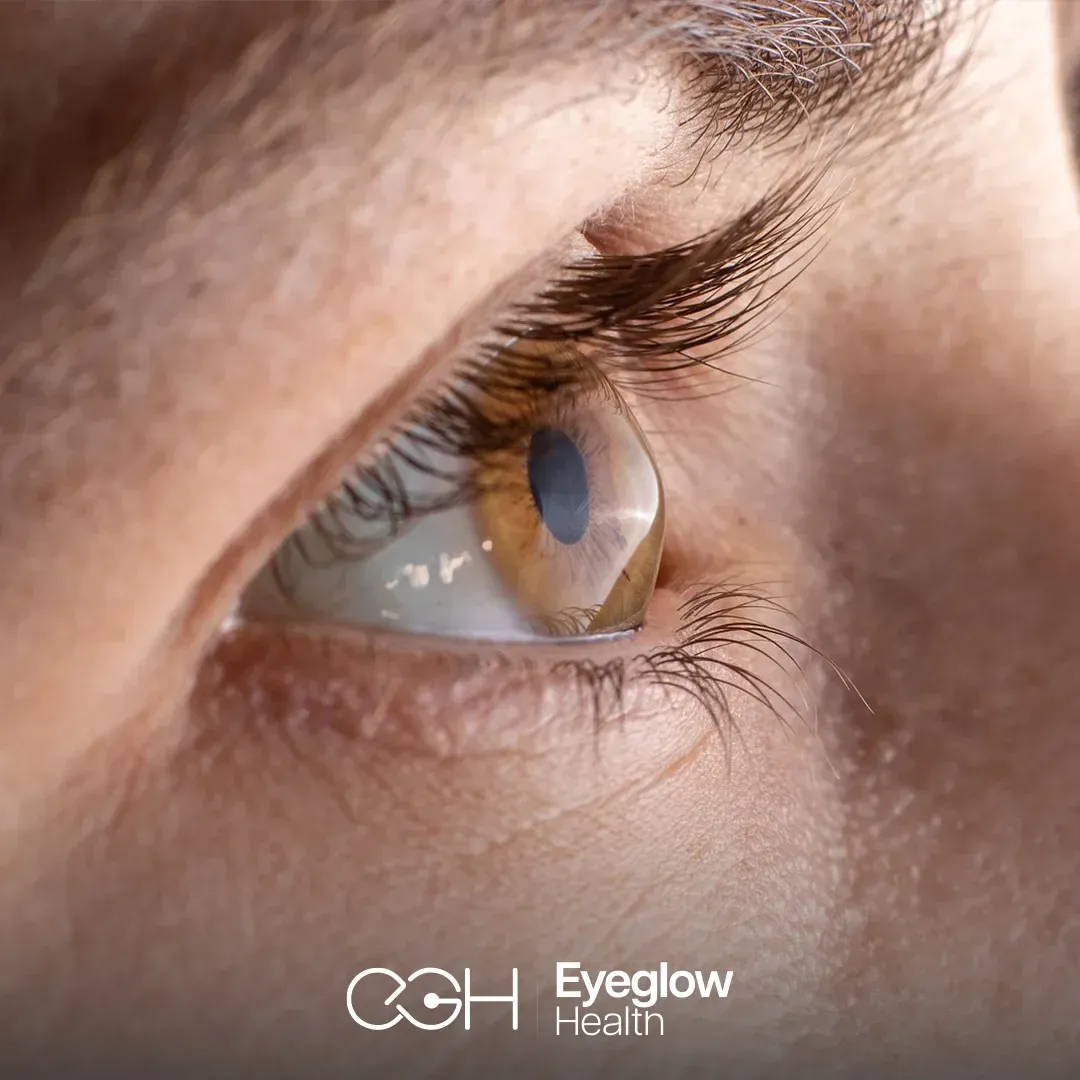
Keratoconus is a progressive eye disease in which the cornea thins and bulges into a cone shape, causing distorted vision. Modern treatment combines corneal cross-linking (CXL) to halt progression, intracorneal ring segments to flatten the cone, the Athens Protocol (CXL + topography-guided PRK) for vision improvement, and DALK transplant reserved for advanced scarring.
At Eyeglow Health in Istanbul, cornea treatment uses the FDA-approved Avedro KXL UV-A platform (Photrexa Viscous + Photrexa, approved April 2016) along with Keraring and Intacs ring segments and modern femtosecond-assisted DALK technique — consistent with American Academy of Ophthalmology (AAO) Cornea & External Disease Preferred Practice Pattern and NICE IPG466 guidance. Every protocol selection is matched to your Pentacam topography, pachymetry, refraction history and disease progression rate — not chosen as a category label.
Cornea treatment is appropriate for most patients with progressive keratoconus, post-LASIK ectasia, or other corneal ectatic conditions; it is not suitable for everyone. Severe scarring, very thin corneas below 380 µm, active herpetic keratitis, or untreated ocular surface disease may require an alternative pathway. That assessment belongs to a cornea specialist who has personally reviewed your topography, pachymetry, OCT and endothelial cell count — not to a marketing brochure.
From first consultation to recovery at home
- 01
Online cornea review
You share recent topography (Pentacam preferred), pachymetry maps, refraction history and any prior contact-lens intolerance. Our cornea specialist team reviews your case and confirms whether the disease pattern is stable, progressive, or post-LASIK ectasia — and which treatment combination is appropriate before a quote is issued.
- 02
Pre-operative imaging in Istanbul
On day 1 we repeat Pentacam Scheimpflug topography, ultrasound or OCT pachymetry, anterior-segment OCT, specular endothelial cell count, dry eye assessment and a slit-lamp examination. These determine the thinnest pachymetric point, K-max progression and confirm that your cornea is thick enough (≥400 µm with epithelium-on protocols, ≥380 µm with hypotonic riboflavin) for cross-linking.
- 03
Personalised treatment plan
Our cornea specialist team reviews the imaging with you and recommends one of four pathways: stand-alone CXL (Dresden or accelerated), CXL combined with topography-guided PRK (Athens Protocol), intracorneal ring segments (Keraring or Intacs) with or without CXL, or — for advanced scarring — a Deep Anterior Lamellar Keratoplasty (DALK) transplant. The reasoning behind the choice is explained, not just the procedure name.
- 04
The procedure (about 30 minutes per eye)
Accelerated CXL: the corneal epithelium is gently removed, riboflavin (vitamin B2) drops saturate the stroma, then the cornea is exposed to UV-A light at 365 nm (9 mW/cm² for around 10 minutes, total energy 5.4 J/cm²) to create new collagen cross-links — keeping the procedure to about 30 minutes per eye. The original Dresden protocol (3 mW/cm² for 30 minutes) is used when the cornea requires a slower, lower-intensity exposure. Both protocols are FDA-approved.
- 05
Day 1, day 5 and second-eye reviews
A bandage contact lens is worn for the first 5 days while the epithelium heals. You return for slit-lamp checks on day 1 and day 5. Vision is blurry and the eye light-sensitive during epithelial healing; clarity returns gradually over 2 to 6 weeks. Most international patients fly home after the day-5 review.
- 06
One-year structured aftercare
Scheduled video reviews at one, three, six and twelve months. We repeat the Pentacam at each visit to document K-max stability — the gold-standard marker of treatment success. Your coordinator stays the same throughout. If progression continues or a secondary procedure (ICRS, Athens Protocol, contact lens fit) is needed, the pathway is already planned with you, not improvised.
CXL vs Intacs / Keraring vs Athens Protocol vs DALK
The right cornea pathway is matched to your disease stage, corneal thickness, refraction and lifestyle — not chosen as a category label. Here is how the four treatment options differ in practice:
| Aspect | CXL | Intacs / Keraring | Athens Protocol | DALK |
|---|---|---|---|---|
| Best for | Progressive keratoconus, post-LASIK ectasia, mild to moderate disease | Moderate keratoconus where vision still correctable, contact-lens intolerant | Mild-to-moderate disease with refractive error, suitable corneal thickness | Advanced disease with corneal scarring, contact-lens failure |
| What it does | Stops disease progression by stiffening collagen | Flattens cone, improves contact-lens fit and refraction | CXL stops progression + PRK reshapes the cornea in one stage | Replaces the anterior 95% of the cornea, preserves your endothelium |
| Vision improvement | Minimal — preserves current vision (rarely improves) | Moderate — flatter cornea improves refraction 1–4 D | Significant — measurable visual acuity gain in 70%+ of eyes | Significant after 6–12 months of graft settling |
| Anaesthesia | Topical drops only | Topical drops only | Topical drops only | Topical + sedation (or general) |
| Recovery time | 2–6 weeks for clear vision | 1–2 weeks | 4–8 weeks | 6–12 months full graft maturation |
| Reversibility | Permanent (collagen change) | Reversible — segments can be removed or exchanged | CXL permanent, PRK permanent | Surgical (graft can be replaced) |
| Regulatory status | FDA-approved (2016, Avedro / Glaukos KXL) | FDA-approved 2004 (humanitarian device exemption for keratoconus) | CXL FDA-approved; combined with off-label topography-guided PRK | Established surgical technique, no device approval needed |
Personalised pricing
Every treatment plan is priced individually after your consultation and imaging review. Request a written, all-inclusive quote — clear, itemised, and with no obligation.
Request a written quoteWhat's included in your cornea treatment package
Included in package
- Pre-op imaging (Pentacam topography, pachymetry, anterior OCT, endothelial cell count, dry eye assessment)
- Cornea specialist team consultation + treatment plan review
- CXL / ICRS / Athens Protocol / DALK procedure (as planned)
- VIP airport transfers (return)
- Bandage contact lens, post-op drops + aftercare kit
- Day-1, day-5, 1m, 3m, 6m, 12m follow-up Pentacam scans
- Multilingual cornea coordinator — 24/7
Paid separately
Items below are not part of the medical package — your coordinator helps you arrange them at no markup.
- Flights to/from Istanbul
- Personal expenses
- Donor corneal tissue fee (DALK only — quoted separately)
- Specialty scleral / RGP contact-lens fitting after surgery (optional)
- Unrelated medical treatments
- Travel insurance (flight cancellation, baggage, general trip cover); your coordinator can recommend a provider at no markup
The surgeons who will care for you
Your procedure is carried out by our cornea specialist team at our partner accredited hospital in Istanbul. Their training and sub-specialty focus are shown below.
Medically reviewed byAssoc. Prof. Dr. Muhammet Derda Özer, FICO
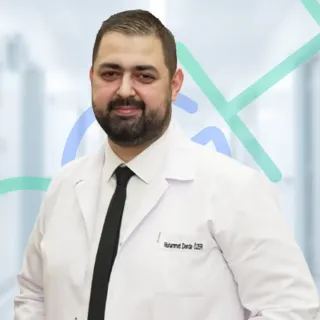
Assoc. Prof. Dr. Muhammet Derda Özer, FICO
Operating Surgeon
Specialises in ocular oncology, vitreoretinal diseases, cataract, refractive, corneal transplantation, glaucoma and pediatric ophthalmic surgery — more than 30,000 ophthalmic operations across a 14-year clinical career.
View full profile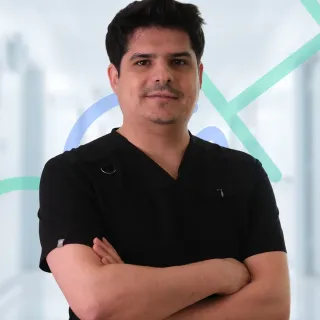
Op. Dr. Önder Aslan
Operating Surgeon
Board-certified ophthalmologist whose surgical practice spans anterior-segment procedures with oculoplastic and retinal sub-specialties — cataract, refractive, eyelid surgery and pediatric eye examinations including retinopathy of prematurity.
View full profile
Op. Dr. Muhammed Talha Sadık
Operating Surgeon
Board-certified ophthalmologist working across vitreoretinal disease, refractive, cataract and glaucoma surgery, with an active anterior- and posterior-segment surgical caseload.
View full profileAre you a candidate for cross-linking or cornea surgery?
You may be a good candidate if
- You have a documented keratoconus diagnosis with progression evidence (K-max increase ≥1 D over 12 months, pachymetry thinning, or worsening refractive error).
- You have post-LASIK ectasia — corneal thinning and irregular astigmatism after a previous laser procedure.
- Your minimum corneal thickness is ≥400 µm (Dresden protocol) or ≥380 µm with hypotonic riboflavin variants.
- You are between 10 and 40 years old (younger eyes show the strongest cross-linking response).
- You are contact-lens intolerant and want a refractive improvement (ICRS, Athens Protocol or DALK candidacy assessed individually).
A different pathway may be safer if
- Corneal thickness below 380 µm at the thinnest pachymetric point — standard CXL contraindicated; specialty hypotonic or accelerated protocols assessed case-by-case.
- Severe corneal scarring affecting visual axis — DALK or transplant rather than CXL.
- Active herpetic keratitis, severe dry eye or untreated ocular surface disease — must be controlled first.
- Pregnancy or breastfeeding — CXL is typically postponed.
- Patients with stable, non-progressive disease for >2 years and good vision in glasses — CXL may not be indicated; monitoring is the appropriate plan.
Disclaimer. Information on this page is consistent with American Academy of Ophthalmology (AAO) Cornea & External Disease Preferred Practice Pattern, NICE Interventional Procedures Guidance IPG466 (Corneal collagen cross-linking for keratoconus, 2013), FDA approval of Photrexa Viscous + Photrexa + KXL System (Avedro / Glaukos, April 2016), and the National Keratoconus Foundation (NKCF) patient resources. It is educational and not a clinical recommendation. The only reliable way to know whether cross-linking, Intacs, Athens Protocol or DALK is the right option for you is a cornea-specialist evaluation based on Pentacam topography, pachymetry, anterior-segment OCT and endothelial cell count — which is why our consultation is free of charge and free of obligation.
Realistic outcomes — the risks that actually matter
Every cornea procedure has measurable risks. We list them here in the same plain language our cornea specialist team uses in your consultation:
Sterile corneal infiltrates / haze
Mild stromal haze occurs in 10–30% of cross-linked corneas during the first 6 months; the majority resolve without intervention. Persistent haze affecting vision is uncommon (under 3%) and treated with anti-inflammatory drops.
Delayed epithelial healing
Most epithelia close within 3–5 days. Around 5% of patients have delayed healing, especially with prior dry eye. We extend the bandage contact lens period and add lubricant drops; full healing is the rule.
Microbial keratitis (infection)
Rare (under 1%) but serious. Risk is minimised by sterile technique, prophylactic topical antibiotics for 5 days, and avoiding water exposure during epithelial healing. Detected at the day-1 or day-5 slit-lamp review and treated immediately.
Treatment failure / continued progression
About 7% of cross-linked corneas show continued K-max progression at 12 months.