
Sapphire FUE Hair Transplant in Turkey — Genuine Sapphire Blade Refinement at Eyeglow Istanbul
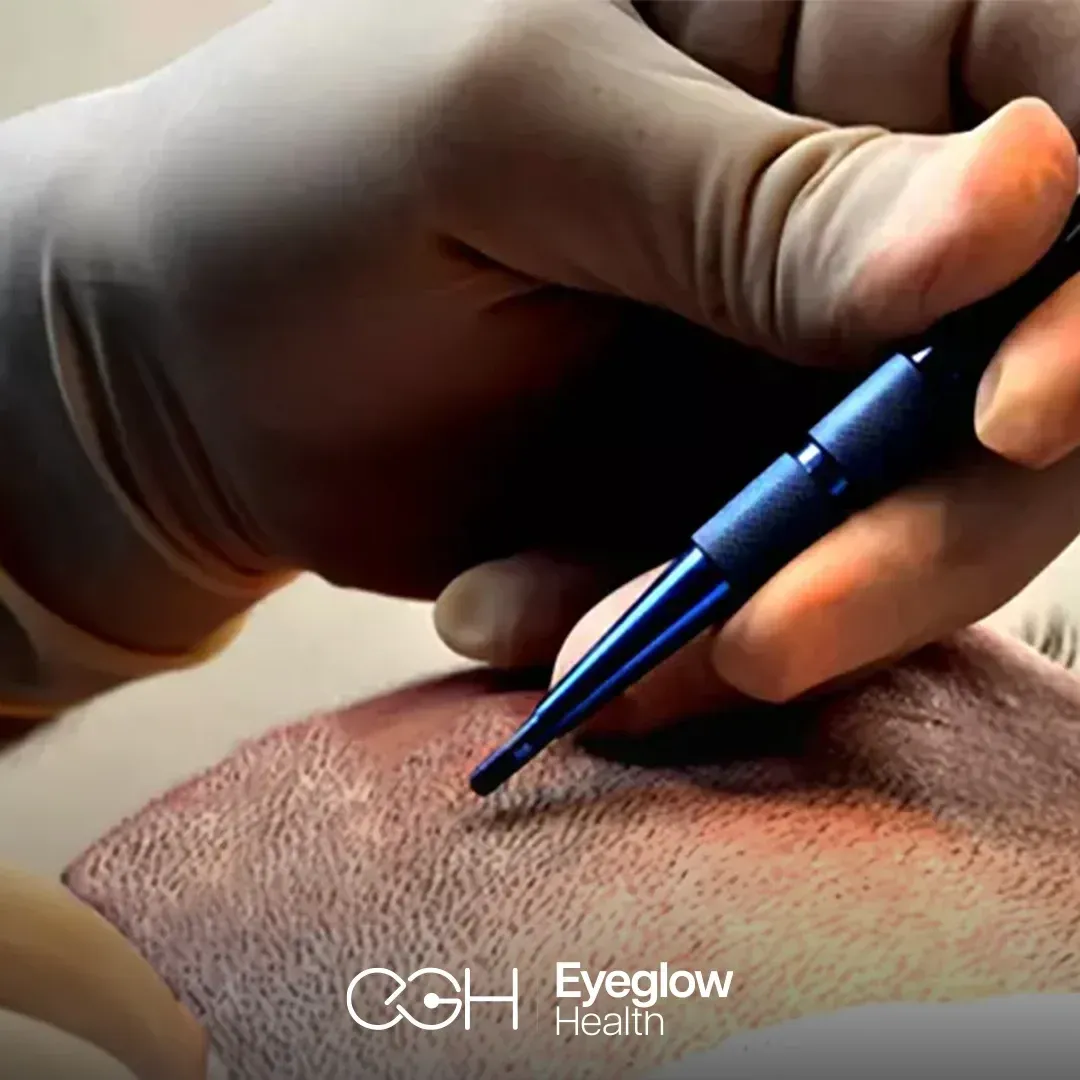
Sapphire FUE uses genuine sapphire (corundum Al₂O₃) blades to create recipient channels — finer micro-incisions, faster healing and a more refined aesthetic finish compared with steel-blade FUE. Performed at our partner accredited hair clinic by a board-certified hair restoration surgeon. We use verifiable sapphire blades (Mannik or DGT manufacturer) — not cubic zirconia imitation marketed as "sapphire".
Verified and listed across leading directories and authorities


What is Sapphire FUE hair transplant?
Sapphire FUE is a variation of standard FUE hair transplantation where the recipient channels are created using genuine sapphire (corundum, Al₂O₃) blades instead of stainless steel. The sapphire is harder than steel, holds a sharper edge longer, and produces cleaner, smaller, more uniform micro-incisions — faster healing, smaller crusts (5–8 days vs 7–10 for steel) and a refined aesthetic finish.
At Eyeglow Health in Istanbul, Sapphire FUE is performed at our partner accredited hair clinic by a board-certified hair restoration surgeon following International Society of Hair Restoration Surgery (ISHRS) standards. We use only verifiable sapphire blades from established medical suppliers (Mannik, DGT) — not cubic zirconia or ceramic imitation blades marketed as "sapphire". The blade manufacturer is available on request at consultation.
Sapphire FUE is the right technique when the patient prioritises front-hairline aesthetic refinement and small-crusting recovery. For very large sessions (4,500+ grafts) standard steel-blade FUE remains equally effective at lower cost — the sapphire premium does not produce a proportional benefit at mega-session scale. The decision belongs to a hair surgeon who has examined your case, not to a marketing-driven default.
From first consultation to recovery at home
- 01
Online consultation + photo assessment
You share four standardised photographs (top of head, both sides, hairline, donor area) and your hair-loss history. Our hair surgeon reviews your case and determines whether Sapphire FUE is the right technique for your aesthetic goal, density target and donor reserve before a quote is issued.
- 02
Pre-operative assessment in Istanbul
On day 1: scalp examination, donor density measurement, hairline design with the surgeon, blood tests (CBC, INR, hepatitis B/C, HIV — Turkish Ministry of Health protocol), photographic documentation and informed consent.
- 03
Hairline design and density planning
The hair surgeon walks you through the planned hairline shape and density target per cm². Sapphire FUE uses finer recipient channels (~1.0 mm vs 1.3 mm for standard steel blades), allowing slightly denser packing and a more refined aesthetic finish, particularly at the frontal hairline.
- 04
Sapphire FUE procedure (6–9 hours)
Step 1: Donor area shaved and follicular units extracted with 0.7–1.0 mm FUE micropunches (manual or motorised). Step 2: Recipient channels created with genuine sapphire blades (1.0, 1.2 or 1.3 mm sizes) at the correct angle and depth. Step 3: Grafts implanted with forceps by the surgical team. Sapphire blades stay sharper longer than steel and produce cleaner micro-incisions with less tissue trauma.
- 05
Day 1 wash + day 3 review
First wash with antiseptic solution at the clinic on day 1. Sapphire channels heal faster than steel — crusting typically resolves by day 5 to 8 (vs 7 to 10 for steel-blade FUE). Mild redness and forehead swelling normal for 3 to 7 days. Shock loss between weeks 2 and 8 is normal; grafts remain alive.
- 06
One-year structured aftercare
Scheduled photographic reviews at 1, 3, 6 and 12 months. First new growth at month 3 to 4; final density at month 12 to 18. Concurrent finasteride and minoxidil guidance per ISHRS recommendations.
Sapphire FUE vs standard FUE vs DHI vs PRP
The right hair-restoration technique depends on case size, density target, scarring tolerance and donor reserve. Here is how the four main options differ:
| Aspect | Sapphire FUE | Standard FUE | DHI | PRP |
|---|---|---|---|---|
| Recipient blade | Genuine sapphire (1.0–1.3 mm) | Steel blade (1.0–1.5 mm) | Choi pen (no separate channel) | Not applicable |
| Channel size | 1.0 mm typical (finest) | 1.3 mm typical | Pen diameter ~1.0 mm | Microneedle |
| Crusting period | 5–8 days | 7–10 days | 7–10 days | None |
| Density target | 45–60 grafts/cm² | 40–55 grafts/cm² | 60–75 grafts/cm² | Not applicable |
| Best for | Refined aesthetic finish, frontal hairline detail | Large sessions, standard cases | Dense packing, unshaven option | Early hair loss, adjunct therapy |
| Procedure time | 6–9 hours | 6–9 hours | 7–10 hours | 60 minutes |
| Price relative | Small premium over standard FUE | Standard | Premium | Adjunct |
Personalised pricing
Every treatment plan is priced individually after your consultation. Request a written, all-inclusive quote — clear, itemised, and with no obligation.
Request a written quoteWhat's included in your Sapphire FUE package
Included in package
- Pre-op consultation + scalp examination + donor density measurement
- Hair surgeon-led hairline design + graft count plan
- Blood tests (CBC, INR, hepatitis B/C, HIV — Turkish Ministry of Health protocol)
- Sapphire FUE extraction + sapphire-blade recipient channel creation + graft implantation
- Genuine sapphire blades (not steel marketed as "sapphire")
- Local anaesthetic + light intravenous sedation
- VIP airport transfers (return)
- All post-op medications + special shampoo + lotion + aftercare kit
- First wash at the clinic + post-op counselling
- 1, 3, 6 and 12-month photographic video follow-up
- Multilingual hair coordinator — 24/7
Paid separately
Items below are not part of the medical package — your coordinator helps you arrange them at no markup.
- Flights to/from Istanbul
- Personal expenses
- Finasteride (prescribed at consultation if appropriate)
- Minoxidil 5% topical (continued at home)
- Second-session top-up (quoted after 12-month review)
- Unrelated medical treatments
- Travel insurance (flight cancellation, baggage, general trip cover); your coordinator can recommend a provider at no markup
Are you a candidate for Sapphire FUE?
You may be a good candidate if
- You want the finest possible recipient channel finish — sapphire blades produce smaller micro-incisions and faster healing than steel.
- You prioritise the frontal hairline aesthetic (where channel size and angle precision matter most).
- You meet standard hair-transplant candidacy: Norwood 2–6 pattern, stable hair loss 12+ months, sufficient donor density, realistic expectations.
- You can tolerate a single 6 to 9-hour session and commit to 12 to 18-month timeline for final result.
A different pathway may be safer if
- Norwood 7 with insufficient donor density — graft yield will not produce a satisfactory result regardless of blade type.
- Diffuse Unpatterned Alopecia (DUPA) — donor follicles themselves are vulnerable; transplanted grafts can also thin.
- Active scalp infection, scarring alopecia (lichen planopilaris, frontal fibrosing alopecia) — must be treated and stable first.
- Bleeding disorders, uncontrolled diabetes — surgical risk outweighs benefit.
Disclaimer. Information on this page is consistent with International Society of Hair Restoration Surgery (ISHRS) practice standards, American Hair Loss Association (AHLA) guidelines and Turkish Ministry of Health International Health Tourism Authority Certificate requirements. It is educational and not a clinical recommendation.
Realistic outcomes — the risks that actually matter
Every hair-restoration procedure has measurable risks. We list them here in the same plain language our hair surgeon uses in your consultation:
Shock loss
Temporary shedding of grafts and surrounding hair between weeks 2 and 8 in 20–40% of cases. Grafts remain alive and regrow over months. Same rate as standard FUE — sapphire blades do not change this risk.
Folliculitis
5–15% mild pustular folliculitis between weeks 2 and 12 as new hairs penetrate skin. Managed with warm compresses and short topical antibiotic course if needed.
Density below expectation
Approximately 10–15% want a second-session top-up after 12 months. Sapphire blades do not increase graft survival vs steel — they improve recipient site healing and aesthetic finish.
Marketing claims of "real sapphire" vs imitation
Some clinics market "sapphire FUE" using cubic zirconia or ceramic blades that are not genuine corundum (Al₂O₃) sapphire. Genuine sapphire blades cost 30–50× more per unit than steel and are reused for multiple cases with sterilisation. We use only genuine sapphire (typically Mannik or DGT brand) — verifiable on request.