
Veneers & Smile Design in Turkey — E.max Porcelain and Composite at Eyeglow Istanbul
Porcelain (E.max IPS by Ivoclar Vivadent / lithium disilicate) and composite resin veneers — thin shells bonded to the front of your teeth to refine colour, shape and alignment with minimal enamel preparation (0.3 to 0.7 mm). Full-arch smile design uses 8 to 10 upper veneers plus lower-arch whitening. Delivered at our partner accredited dental clinic by a DDS board-certified dental specialist with a reversible trial smile mock-up before any enamel is touched.
Verified and listed across leading directories and authorities


What are dental veneers?
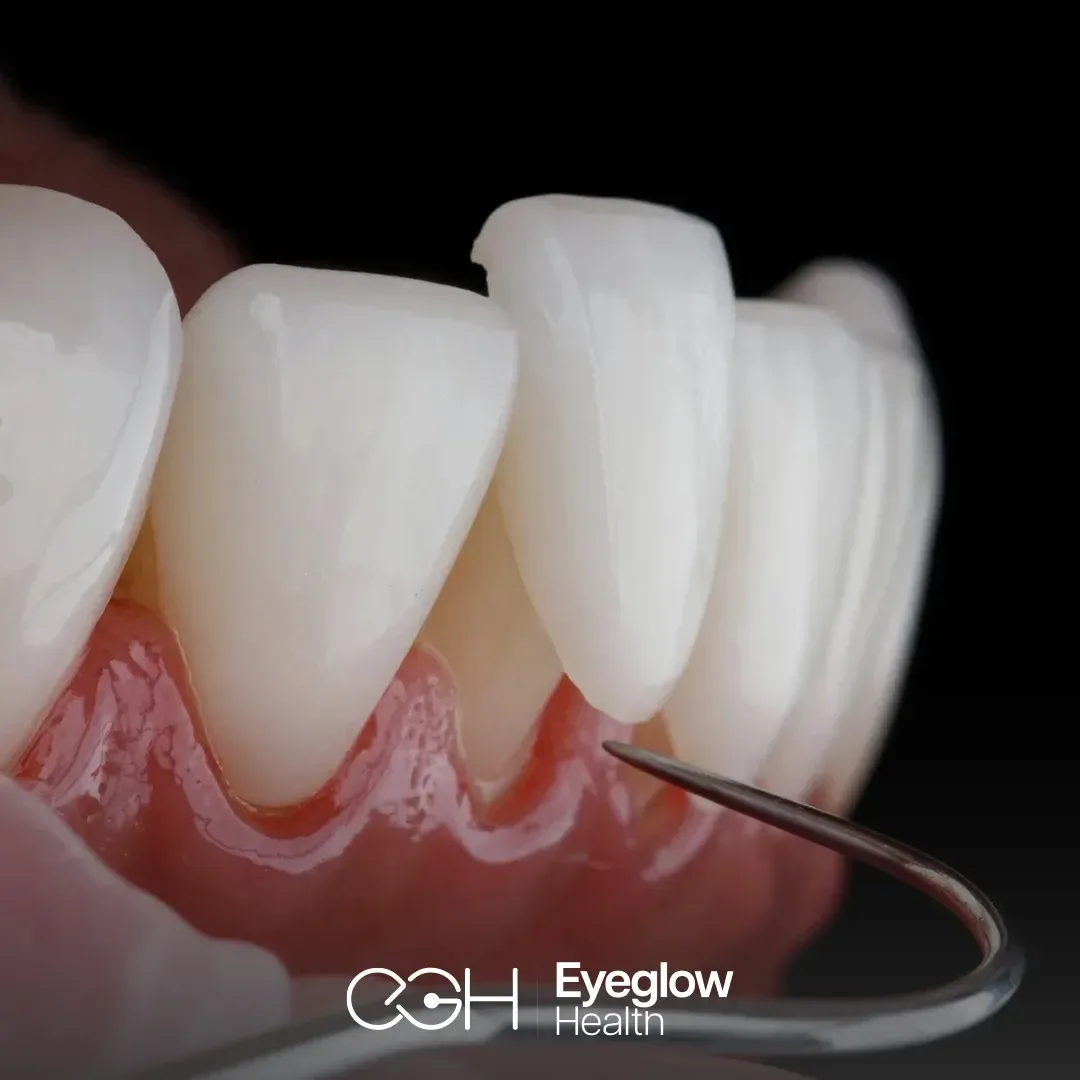
A dental veneer is a thin shell — porcelain (E.max IPS lithium disilicate) or composite resin — bonded to the front surface of a tooth to refine its colour, shape, alignment or size. Porcelain veneers are 0.3 to 0.7 mm thick (about the thickness of a fingernail) and require minimal enamel removal. Composite veneers can be applied directly in a single visit with little or no preparation.
At Eyeglow Health in Istanbul, veneers and smile design are placed at our partner accredited dental clinic by a DDS board-certified dental specialist working with a master ceramist. We use original Ivoclar Vivadent E.max IPS and IPS Empress ceramic blocks (the same material used in cosmetic dentistry clinics in Zurich, London and New York) with full batch documentation. The Turkish Ministry of Health International Health Tourism Authority Certificate is held by both Eyeglow and the partner clinic. We follow American Academy of Cosmetic Dentistry (AACD), American Dental Association (ADA) and FDI World Dental Federation guidelines on bonding protocol and informed consent.
The decision between composite, E.max porcelain or Empress veneer — or between veneers and crowns — belongs to a DDS who has personally examined your teeth, smile line and bite. Veneers reshape and recolour the visible front of essentially healthy teeth; they are not a substitute for orthodontics, periodontal treatment or restorative dentistry on damaged teeth.
From smile consultation to final bonding
- 01
Online consultation + smile photo assessment
You share four standardised smile photographs (rest, smile, side profile, retracted view) and a brief description of what you want to change — colour, shape, alignment, gaps, worn edges. Our partner DDS reviews the case, recommends composite or porcelain based on your enamel quality and aesthetic goals, and provides a written veneer count and treatment plan with itemised pricing before any payment is requested.
- 02
Pre-treatment assessment in Istanbul
On day 1: clinical examination, periodontal screening, smile-line analysis, gingival display measurement, occlusion (bite) check, professional cleaning, blood tests where indicated, and informed consent. Digital smile design is performed with software simulation so you can see and approve the proposed shape, colour and length of your veneers before any enamel is touched.
- 03
Trial smile (mock-up) on day 2
A direct composite or 3D-printed resin mock-up is bonded onto your unprepared teeth for you to wear, photograph and approve. This is a fully reversible try-on — you see the planned veneers in your own mouth, on your own face, before any preparation is done. Adjustments (length, shape, shade) are made at this stage; the design is locked only when you approve.
- 04
Minimal enamel preparation (0.3 to 0.7 mm)
On day 3, the front surface of each tooth is gently reshaped by 0.3 to 0.7 mm — about the thickness of a fingernail — to make room for the veneer. Most cases require no anaesthetic because preparation stays in enamel and does not reach the underlying dentine. A digital scan or physical impression is taken; provisional veneers (temporary plastic veneers) are bonded for 4 to 7 days while the final veneers are crafted in the partner dental laboratory.
- 05
Veneer fabrication + final try-in
The partner dental laboratory crafts each veneer individually — E.max IPS porcelain (lithium disilicate by Ivoclar Vivadent, Switzerland), IPS Empress (leucite-reinforced ceramic), or layered composite resin. Shade matching uses a digital spectrophotometer plus the dental technician's eye for translucency and characterisation. On day 6 to 7 the final veneers are tried in with water for fit and shade approval before bonding.
- 06
Cement bonding + structured aftercare
Each veneer is bonded individually with light-cured resin cement using a 4-step adhesive protocol (etch, prime, bond, light-cure). Bite is adjusted and polished. You leave Istanbul with your new smile fully fitted. Eyeglow coordinator provides 1, 3, 6 and 12-month photographic reviews. A protective night guard is supplied to all veneer patients to protect against grinding-related fracture.
Porcelain veneers vs composite vs crowns vs whitening
The right cosmetic dentistry option depends on what you want to change — colour, shape, alignment, structure — and on how much underlying enamel and tooth structure you want to preserve. Here is how the four main options compare:
| Aspect | Porcelain veneer | Composite | Crown | Whitening |
|---|---|---|---|---|
| Material | E.max porcelain / lithium disilicate | Direct composite resin | Zirconia / metal-ceramic | Bleaching gel (no material added) |
| Tooth preparation | 0.3–0.7 mm enamel reduction | Minimal or no preparation | 1.5–2.0 mm circumferential reduction | No preparation |
| Lifespan | 10–15+ years | 5–7 years (re-polishing needed) | 10–15 years | 1–3 years (relapses) |
| Stain resistance | Excellent (porcelain does not stain) | Moderate (composite stains over time) | Excellent | N/A (the tooth itself is whitened) |
| Aesthetic outcome | Highly natural translucency | Good, technique-dependent | Strong but slightly opaque | Whiter but same shape and alignment |
| Reversibility | Irreversible (enamel removed) | Largely reversible (no/minimal prep) | Highly irreversible (most tooth removed) | Fully reversible |
| Cost (Turkey) | Request a written quote | Request a written quote | Request a written quote | Request a written quote |
Personalised pricing
Every treatment plan is priced individually after your consultation. Request a written, all-inclusive quote — clear, itemised, and with no obligation.
Request a written quoteWhat's included in your veneer and smile design package
Included in package
- Pre-treatment consultation + clinical examination + smile-line analysis
- Professional dental cleaning before veneer preparation
- Digital smile design simulation + reversible trial smile mock-up for approval
- Blood tests where indicated (Turkish Ministry of Health protocol)
- Veneer preparation by DDS board-certified dental specialist at partner accredited dental clinic
- Local anaesthetic where needed (most cases require none)
- Provisional temporary veneers during the 4–7 day fabrication period
- Final veneers fabricated in the partner dental laboratory (E.max IPS / Empress / composite)
- VIP airport transfers (return)
- Final cement bonding + bite adjustment + polish
- Protective night guard supplied to every patient (prevents grinding-related fracture)
- 1, 3, 6 and 12-month photographic video follow-up
- Multilingual dental coordinator — 24/7
Paid separately
Items below are not part of the medical package — your coordinator helps you arrange them at no markup.
- Flights to/from Istanbul
- Personal expenses
- Pre-veneer treatments where indicated (root canals, gum treatment, orthodontic alignment) — quoted separately if needed
- Lower-arch whitening upgrade if not part of the agreed plan
- Replacement night guards beyond the first one (typically every 2–3 years)
- Travel insurance (flight cancellation, baggage, general trip cover); your coordinator can recommend a provider at no markup
Are you a candidate for veneers and smile design?
You may be a good candidate if
- Your underlying teeth are essentially healthy — no active decay, no untreated root infection, no advanced gum disease.
- You have adequate remaining enamel for bonding — veneers bond reliably to enamel; teeth that are already heavily worn or root-treated may need crowns instead.
- Your bite is stable — front-teeth-only veneers work well when your back teeth contact properly; severe overbite or open-bite may need orthodontics or crowns first.
- You are not a heavy nighttime grinder — or you accept that a night guard must be worn every night to protect the veneers from fracture.
- Your expectations are realistic — veneers reshape and recolour visible front teeth; they do not move teeth, change face shape or perform surgery.
A different approach may suit you better if
- You have untreated periodontal disease or active dental decay — these must be stabilised before any cosmetic dentistry.
- You are a heavy bruxer (clencher / grinder) who will not wear a night guard — porcelain veneer fracture risk is significantly elevated.
- You have severe tooth misalignment requiring 3+ mm of movement — orthodontic alignment (Invisalign, clear aligners or braces) is the more conservative first step.
- Your front teeth are heavily restored with old fillings or have had root canals — porcelain crowns may be more durable than veneers in these cases.
- You expect veneers to be a permanent maintenance-free solution — every 10 to 15 years some veneers will need replacement, the same as any restoration.
Disclaimer. Information on this page is consistent with American Academy of Cosmetic Dentistry (AACD) guidelines, American Dental Association (ADA) standards, FDI World Dental Federation recommendations and Turkish Ministry of Health International Health Tourism Authority Certificate requirements. Veneer candidacy is a clinical decision based on enamel quality, bite stability, periodontal status and patient priorities — not a marketing-driven default.
Realistic outcomes — the risks that actually matter
Every veneer treatment has measurable risks. We list them here in the same plain language our DDS uses in your consultation:
Sensitivity in the first 2 to 4 weeks
Brief sensitivity to cold liquids is reported in approximately 20 to 30% of veneer patients during the first 2 to 4 weeks after preparation, particularly in cases where preparation comes close to dentine. Sensitivity resolves spontaneously in over 90% of cases and is managed with desensitising toothpaste (potassium nitrate / Sensodyne). Persistent sensitivity beyond 6 weeks is uncommon and may indicate that the underlying tooth needed a different restoration.
Veneer fracture (especially in grinders)
Porcelain veneer fracture occurs in approximately 4 to 7% of veneers over a 10-year period. The most common cause is nighttime bruxism (grinding) without a protective night guard. Other causes: biting on very hard objects (ice cubes, pen caps, hard sweets), trauma from sports without a mouthguard. A fractured veneer must be replaced; the replacement is generally straightforward but costs the price of one veneer. We supply a night guard to every veneer patient and strongly recommend its nightly use.
Recurrent gum inflammation around the veneer margin
If the veneer margin is not perfectly polished or if oral hygiene is inadequate, the gum line around the veneer can become inflamed. Daily flossing or interdental brushing at the veneer margin is essential. Professional dental hygiene every 6 months is required to maintain healthy gums around veneers — this is the same maintenance any restoration requires.
Aesthetic mismatch with surrounding teeth (single veneer cases)
When a single veneer is placed next to natural teeth, perfectly matching the shade, translucency and characterisation of the natural tooth is technically demanding — even an excellent ceramist may need two try-ins to achieve a seamless result. Full upper-arch cases (8 to 10 veneers) avoid this challenge because all visible teeth are veneered to a coordinated new design. We are honest in single-veneer consultations about achievable shade-matching limits.