
The quick answer
LASIK reshapes the cornea and suits younger patients with a stable prescription and a clear natural lens. Smart Lens replaces the eye's own lens with a premium intraocular lens, and suits patients over the mid-40s, those with presbyopia, or anyone with early cataract. The deciding factors are age, prescription and lens clarity — not which procedure sounds more advanced.
When patients ask which is "better", they are usually asking the wrong question. LASIK and refractive lens exchange (the procedure marketed as Smart Lens) treat different parts of the eye and are matched to different stages of life. Choosing well means understanding what each one actually changes — and what it leaves untouched.
Two procedures, two targets
LASIK is a corneal procedure. A femtosecond laser creates a thin flap, and an excimer laser removes a precisely calculated layer of corneal tissue so that light focuses correctly on the retina. The eye's own lens is left in place. Because the cornea is reshaped to your current prescription, LASIK works best when that prescription has been stable for at least a year.
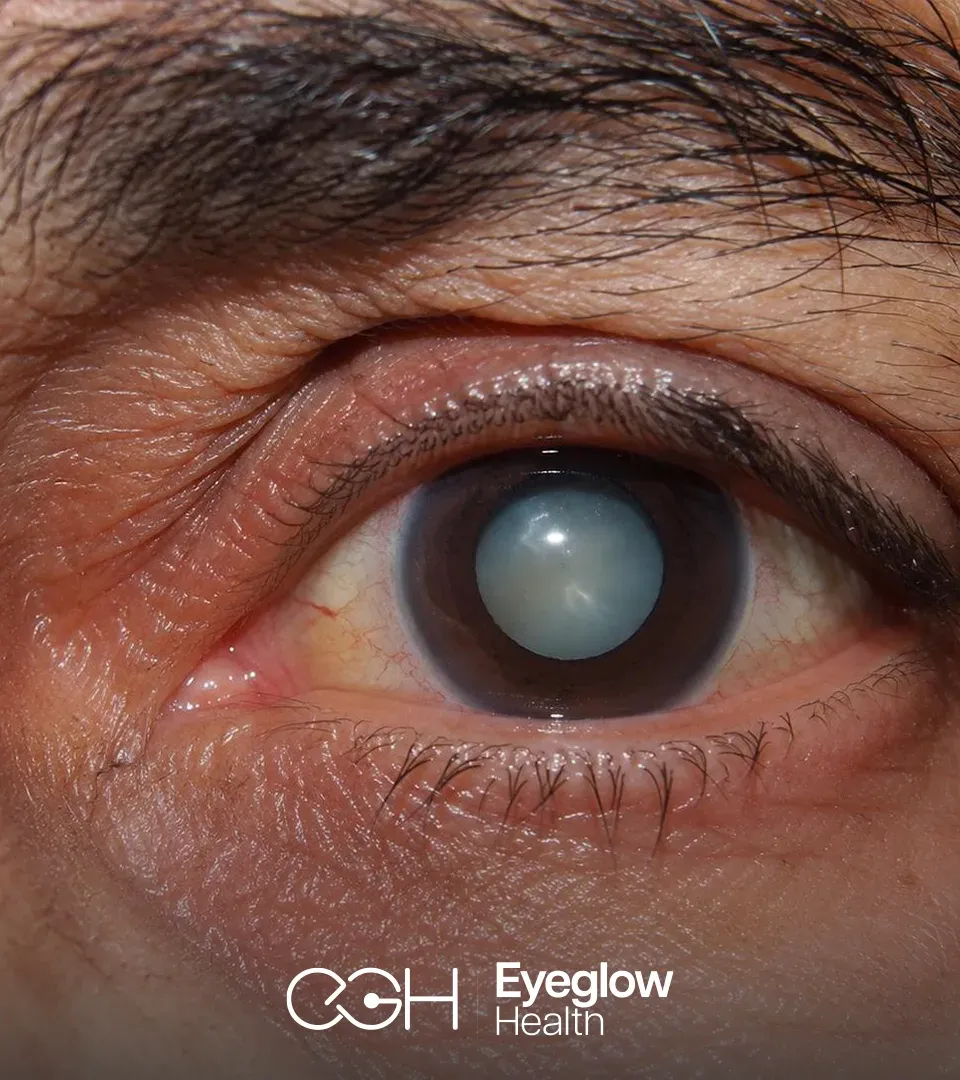
Smart Lens — refractive lens exchange — works inside the eye. The natural lens is removed, exactly as in cataract surgery, and replaced with an artificial intraocular lens (IOL). With a trifocal or extended-depth-of-focus lens, this can correct distance, intermediate and near vision in one step. It also removes the lens before a cataract can ever form, which is why it is often chosen for patients already approaching cataract age.
LASIK vs Smart Lens at a glance
| Aspect | LASIK | Smart Lens |
|---|---|---|
| What is reshaped | The cornea (laser ablation) | The eye’s own lens (replaced) |
| Typical age range | 18–45, stable prescription | 45+ or early cataract |
| Treats presbyopia | No (reading glasses still needed later) | Yes (trifocal / EDOF lenses) |
| Prevents future cataract | No | Yes (lens is removed) |
| Reversible | No | Lens can be exchanged |
| Recovery to functional vision | 24–48 hours | 2–7 days per eye |
Reading the table. No single row decides the outcome on its own. A 30-year-old with a clear lens and a stable −4 prescription is a natural LASIK candidate; a 52-year-old with early lens changes and a wish to drop reading glasses is usually better served by Smart Lens. Most decisions are this clear once age and lens clarity are on the table.
Who each option suits
LASIK tends to be the better starting point if
- You are roughly 18–45 with a prescription that has been stable for a year.
- Your prescription sits within the laser range (up to about −10 D myopia, +6 D hyperopia, 6 D astigmatism).
- Your cornea is thick enough to preserve a safe residual bed, confirmed by topography and pachymetry.
- Your natural lens is still clear, with no early cataract.
Smart Lens tends to be the better option if
- You are over the mid-40s and want freedom from both distance and reading glasses.
- You have early cataract, or lens changes that will need surgery within a few years anyway.
- Your prescription is beyond the comfortable LASIK range, or your cornea is too thin for laser.
- You want a result that also removes future cataract surgery from the equation.
What recovery looks like
After LASIK, functional vision usually returns within 24 to 48 hours, and most international patients fly home on day three or four after a post-operative review. After Smart Lens, each eye is generally treated on a separate day, and vision settles over two to seven days as the brain adapts to the new lens — particularly with multifocal designs, where a short neuroadaptation period is normal.
In both cases, the operation is only part of the pathway. Eyeglow packages include scheduled follow-up reviews at one, three, six and twelve months, with the same coordinator throughout, so that any fine-tuning is caught early rather than left to chance.
Common questions
Is Smart Lens better than LASIK?
At what age should I consider Smart Lens instead of LASIK?
Can I have LASIK if my prescription is very high?
Does Smart Lens hurt or require a hospital stay?
What does each option cost at Eyeglow Health?
How we decide with you
The comparison on this page is a map, not a diagnosis. The only reliable way to know whether LASIK or Smart Lens is right for you is a surgeon-reviewed evaluation based on your topography, pachymetry, lens clarity and prescription history. Assoc. Prof. Dr. Özer reviews these results personally and explains the reasoning before any quote is issued — the consultation is free of charge and free of obligation.
Educational disclaimer. This article is consistent with American Academy of Ophthalmology (AAO) clinical guidance on refractive surgery and refractive lens exchange. It is educational and is not a clinical recommendation. Individual suitability is always confirmed by a full ocular examination.